




Connecting the Dots: What We Heard at Climate Week 2026

It’s been a couple weeks since New York Climate Week, and we’re working our way through all the follow-ups and upcoming projects (stay tuned!). But the conversations shouldn’t end when the week does. We’ve since taken the time to reflect on what we heard and what it means for our work ahead.
As an applied research center, we’re less interested in making tweaks at the margins of systems, than in what it would take to make it happen through real structural change. So we went into as many rooms as we could, with companies, investors, governments and communities, and listened as much as we talked.
Our reflections below are grouped by area of work, which is simply the easiest way to read them. In practice, none of them stand alone. The way we finance the transition shapes what happens to nature, minerals and industry, and the reverse is true too. That’s the lens we try to bring to everything we do.
On Financing Climate & Development

What we keep hearing: Whether at London Climate Action Week or at New York Climate Week, “climate risk” is routinely treated as a single problem. The assumption is that if different institutions measure and respond to it, they will pull the economy coherently toward planetary safety. In practice, this has not been the case. This is most clearly evidenced in the private sector, where the proliferation of targets, methodologies and disclosure has not translated into commensurate absolute emissions reductions.
What we want to shift: Our 2026 report From Planetary Hazard to Financial Stability disentangles three things “climate risk” conflates: the planetary hazard itself, the economic damage it can produce, and the financial losses that may follow. This conflation loads financial institutions with expectations they are neither mandated nor able to meet. In the private sector, it has created busy work of measuring, disclosing and reporting information that is not decision-useful, distracting from mitigation, the only response that reduces the underlying hazard. Learn more in our recent piece on Redefining Corporate Climate Action for Systems Transformation.
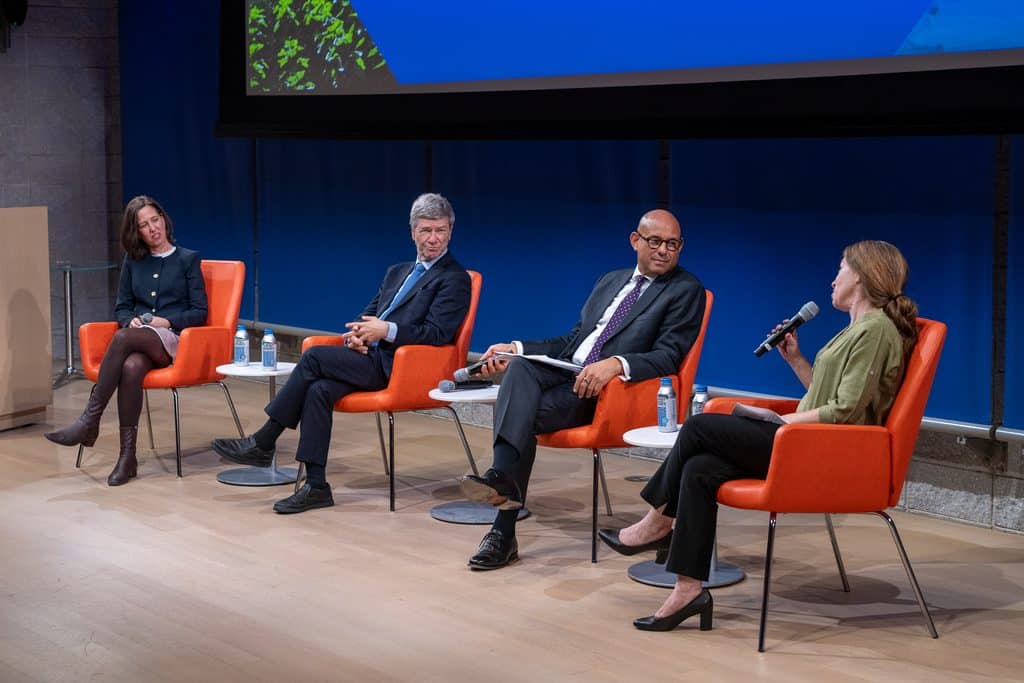
Lisa Sachs took this discussion to various stages across the week: to corporate climate leaders with Milkywire, to asset managers with Federated Hermes, and onto panels with Rivian, Earth Finance, the Global Energy Alliance for People and Planet, and the Columbia and London Business School alumni clubs. We are also eager to share our newly launched piece Financing Better Systems developed through conversations with practitioners at London Climate Action Week and New York Climate Week.
We invite practitioners working on system-shaping approaches to engage with us. Write to Lisa Sachs.
On Financing the Transition in Emerging Markets

What we heard: The case for clean energy is increasingly being made in the language of cost and security rather than climate. This shift may draw in capital that climate-related mandates never reached. But it’s only persuasive when the numbers already work, and in many emerging markets they don’t do so yet, because capital costs more than the underlying risk warrants. What’s still needed is structural: changing how risk is assessed and priced, and moving finance beyond one deal at a time.
What we did: With the Environmental Defense Fund and partners, we brought investors and practitioners together to rethink sovereign ceilings. This is the practice of capping a project’s credit rating at, or otherwise constraining it by, its host country’s rating, regardless of the project’s own risk. The result is mispriced risk and a higher cost of capital, which hits hardest for infrastructure like clean energy, where most of the cost is paid upfront. Tables then worked through the levers available to investors, policymakers, regulators and data providers, from alternative risk assessment to better-targeted guarantees to reforms that would help blended finance scale.
With UNIDO, BNP Paribas, the Global Cement and Concrete Association and partners, we made the investment case for decarbonizing cement in emerging markets. Cement accounts for roughly 7% of global CO₂ emissions, and proven solutions already exist. The challenge is turning them into investable, repeatable projects at scale by aligning sector roadmaps, energy and infrastructure, performance standards and demand, policy, data, and financing—so capital can flow without treating every plant as a bespoke transaction. A pooled risk-sharing facility for industrial decarbonization for industrial decarbonization could help make this happen, with cement providing a model for other hard-to-abate sectors. Read the reflections from our discussion here.
We’re pulling together what emerged from both sessions. Write to Perrine Toledano, Ana Maria Camelo Vega and Laura Garcia Cancino to hear more.
On Nature, NbS, and Resilience

What we heard: Nature had more space on the agenda this year, but much of the conversation remains focused on how to value nature rather than how to protect it. That runs into a basic problem: investments in resilience mostly generate avoided losses, and avoided losses don’t turn into cash flows. There’s a mismatch between how capital markets actually work and how the case for nature finance is currently being made. And many of the decisions that determine resilience sit outside finance altogether, in land use, zoning, and how rigorously codes are enforced.
Traditional and Indigenous knowledge was also a clear emerging theme across the week, and the conversations laid important groundwork on principles. There is an opportunity now to move from why this knowledge matters to how it shapes the design of solutions, which is a central question CCSI is currently exploring.
What we did: Our ongoing work on Nature-based Solutions in the mining lifecycle aims to move the discourse past due diligence and community engagement. This year, with Vale Base Metals, we brought together mining, technology, community and civil society practitioners to explore how scientific and technical knowledge can be braided with traditional ecological knowledge to better design durable nature-based solutions across the mining lifecycle. It connects to our broader work on socio-bioeconomy, which looks at how economies can be built around healthy ecosystems and the communities that depend on them. Stay tuned for more!
Our research on this is underway. Write to Lara Fornabaio, Hansika Agrawal and Sara Saloum to follow along.
On Minerals & Industrial Policy
What we heard: Factories for solar panels, batteries, and electric vehicles are no longer clustered in a handful of countries. More and more are being built in emerging economies, and Indonesia has become one of the largest destinations. But hosting a factory doesn’t mean the country benefits as much as it could. Many of these plants make products for export, so a country can manufacture batteries for the world while its own shift to renewable energy systems barely moves.
In Africa, the challenge looks different. Governments already have strategies for turning their mineral wealth into broader development. What’s missing is the means to carry them out: enough capacity within government, closer regional cooperation, and support for officials when they sit across the table from investors.
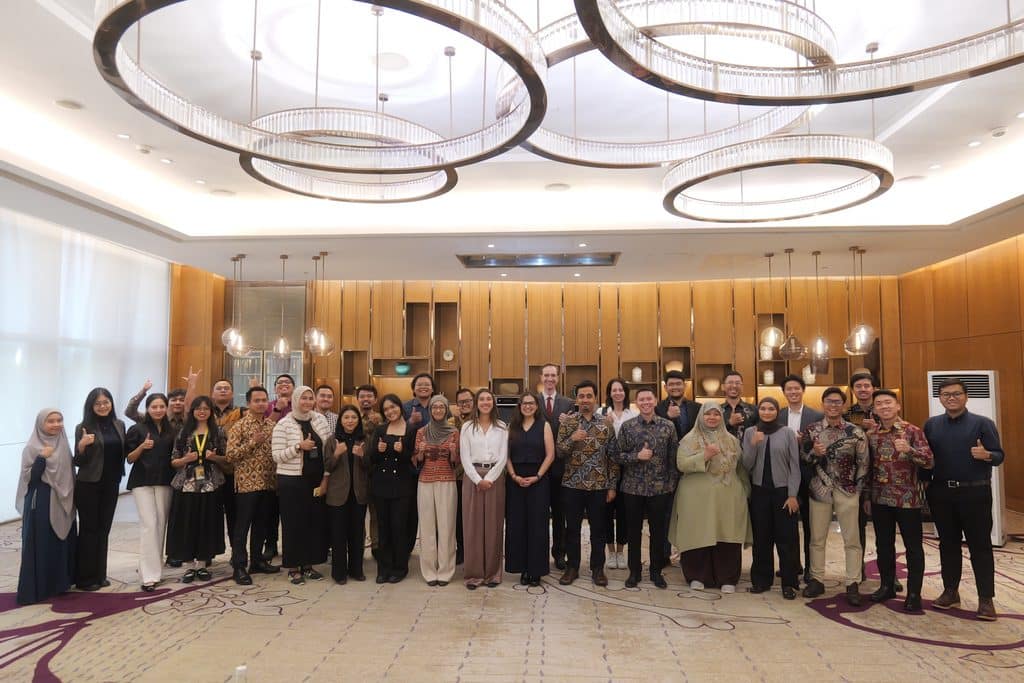
What we did: We launched three new reports, sponsored by ViriyaENB, on Indonesia’s green industrialization. The first shows how mining, renewable energy, and green industry can reinforce one another in a feedback loop in the nickel sector. The second sets out how circular economy principles in nickel value chains can be part of industrial policy, not adjacent to it. The third delves into how to finance both through tailored risk-sharing solutions. Together, they speak to how industrial growth can drive a country’s own transition and help shape regional approaches.
With the ClimateWorks Foundation, we brought lessons from Indonesia and our prior work in Africa’s zero-carbon electrification and industrial policy to stakeholders working on policy and finance for Africa’s minerals-based industrialization. Martin Dietrich Brauch and Ana Maria Camelo Vega opened by setting out the conditions that make the feedback loop possible, from data and institutions to infrastructure and the capacity to implement, all underpinned by cooperation between African countries, with finance running through each. The speakers who followed largely converged with that framing, and it shaped the discussion that followed. They stressed planning infrastructure as industrial policy, preparing projects well enough to change how investors see risk, and giving communities real power, from usable transparency to remedies designed before construction starts.
One gap came through clearly. Governments and the communities affected by these projects need support at the negotiating table, and far too little is available. As one participant noted, CCSI is among the few institutions already providing this kind of support to both governments and communities, and providing it effectively. We will continue that work on the road to COP32 in Addis Ababa.
Write to Martin Dietrich Brauch, Laura Garcia Cancino, and Ana Maria Camelo Vega to hear more.
On Circularity

What we heard: Recovering critical minerals from products at their end-of-life is still slow to scale. Many in the market are waiting for policy to settle, particularly on whether recycled battery materials can be exported for processing. Another approach we saw was “circularity certificates,” but the mechanics remain unclear, and stakeholders are still more concerned about how to finance circular practices.
What we did: With the Carbon Trust, we’ve spent the past year engaging with a Community of Practice and developing the Metals-as-a-Service (MaaS) model. Under MaaS, the provider retains ownership of the metal and charges for its use or performance over an asset’s life rather than selling it outright. That gives the provider both the incentive and the means to track and recover it at end of life, making its residual value visible to lenders and insurers. Along with Ellen MacArthur Foundation, Buckstop and Solas Capital, we brought the model to capital providers and circularity practitioners to test what it would take to make it bankable. Read the reflections from our discussion here.
At the Cool House, marking ten years of the Kigali Amendment, we engaged with industry experts on how the fastest emissions cut available today isn’t just about transitioning to new refrigerants with low Global-Warming Potential — it’s embedding circularity into the process by keeping the ones you already have from venting, recovering them, and bringing them back to the loop at the end of life. Our research presents a nexus approach, on how the refrigerant transition, refrigerant circularity, and energy efficiency are best pursued in tandem. Visitors’ input on barriers will shape our next phase of work.
Our work on both topics is evolving. Write to Perrine Toledano, Laura Garcia Cancino, and Aniruddha Jaydeokar to follow along.
On AI & Sustainability
What we heard: AI was everywhere this year, and largely focussed on data centers and their ecological/economic footprints, rather than on AI governance. It’s also deeply divided. Some see AI as a way to accelerate the transition; others see a threat to energy systems, jobs and the information people rely on to make decisions. That divide will sound familiar to anyone who works on climate.
But there’s an important difference. With climate, we have spent decades responding to a problem already well underway. With AI, we’re still at a fork in the road, early enough to plan ahead and shape where it goes, rather than manage the consequences afterward.
Here, climate offers useful lessons in what global governance can and can’t do. The Montreal Protocol showed that coordinated action works when the rules are clear and the right institutions are on board. Decades of climate negotiations have shown how far ambition gets when the institutions holding the real levers sit outside the room.
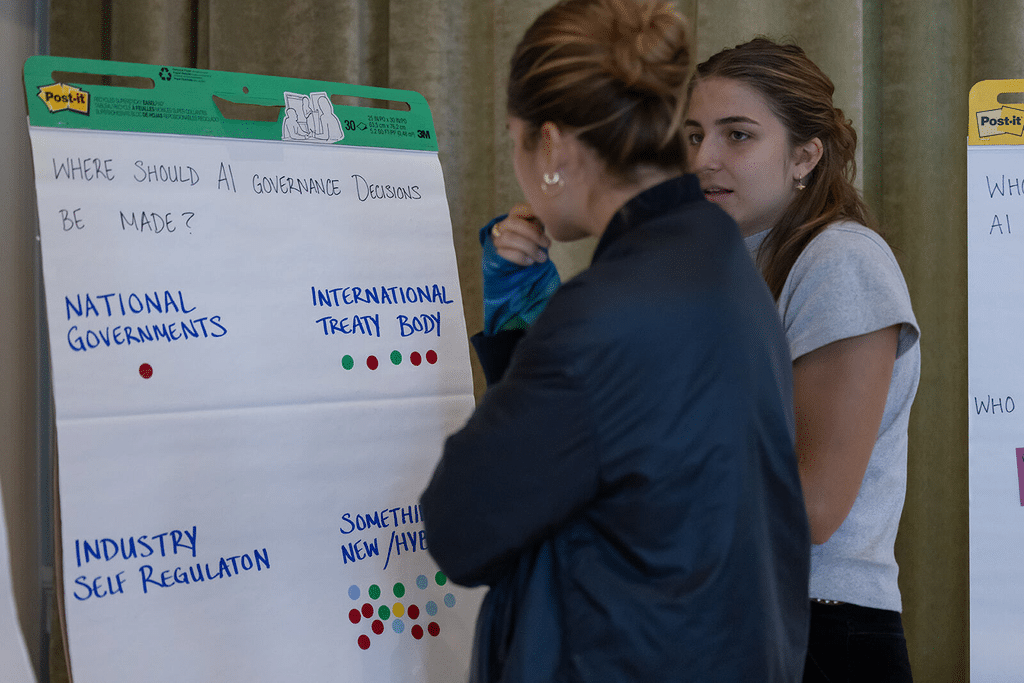
What we did: With Hitachi R&D, we hosted a conversation at Columbia on governing AI for sustainable futures, building on our report AI and Sustainability Transitions and our recent writing on the infrastructure of intelligence and Malaysia’s data center boom. We used this session to widen the lens beyond the usual focus on discrete risks like bias and misinformation, or data centers’ environmental and social impacts, toward the governance of frontier existential risks. A small number of powerful companies control much of the computing power, data and models that AI depends on. That concentration shapes who captures AI’s benefits, who bears its costs, and how much room governments have to steer it toward public goals. Getting the rules right, while the market is still taking shape, is part of planning ahead.
Write to Lara Fornabaio and Perrine Toledano to learn more.
On the Road to COP32
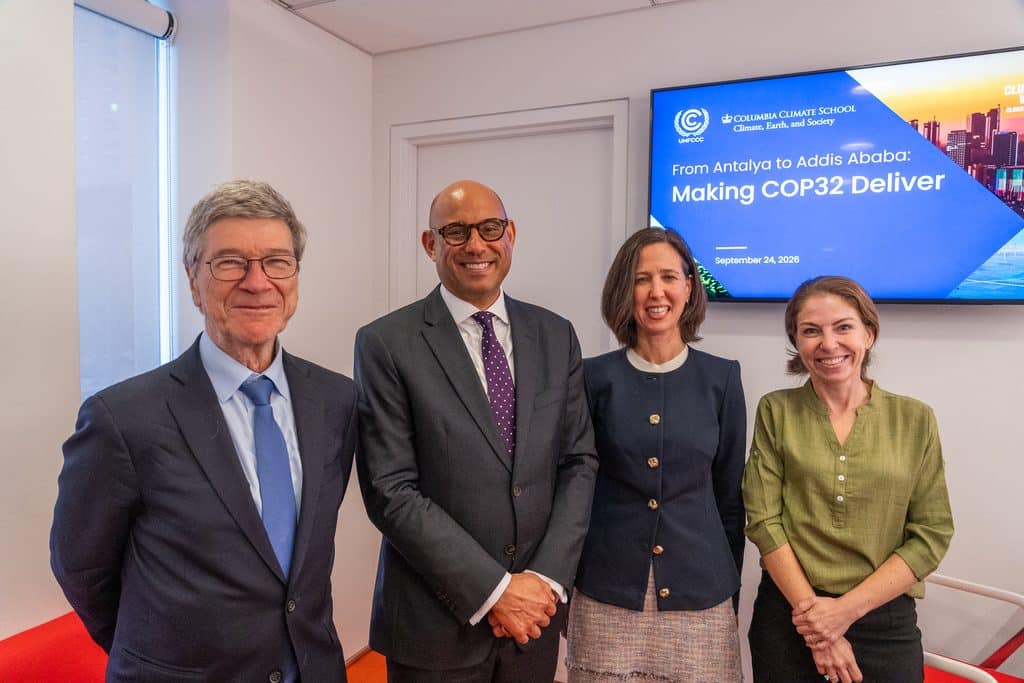
With COP31 in Antalya weeks away and COP32 coming to Addis Ababa next year, we joined the Columbia Climate School in bringing together UNFCCC Executive Secretary Simon Stiell, Professor Jeffrey Sachs and Dean Alexis Abramson. Lisa Sachs moderated the conversation on how the COP process can turn ambition into action.
Decades of negotiations have struggled to deliver, not for lack of capital or technology, but because the institutions that decide what gets built and what it costs sit outside the negotiating room. With Ethiopia and the African Union at the helm, COP32 is a chance to change that by bringing coordinated plans across energy, finance, food and nature that are already in motion. We look forward to supporting that work alongside African partners.
Read Lisa’s piece on how Ethiopia can make COP32 the summit that actually delivers and and her op-ed with Claver Gatete and Jason Veysey on why every country needs an energy model to plan its transition.
Write to Lisa Sachs to learn more.