



Making Cement Bankable: Inside a Climate Week Roundtable on Industrial Decarbonization
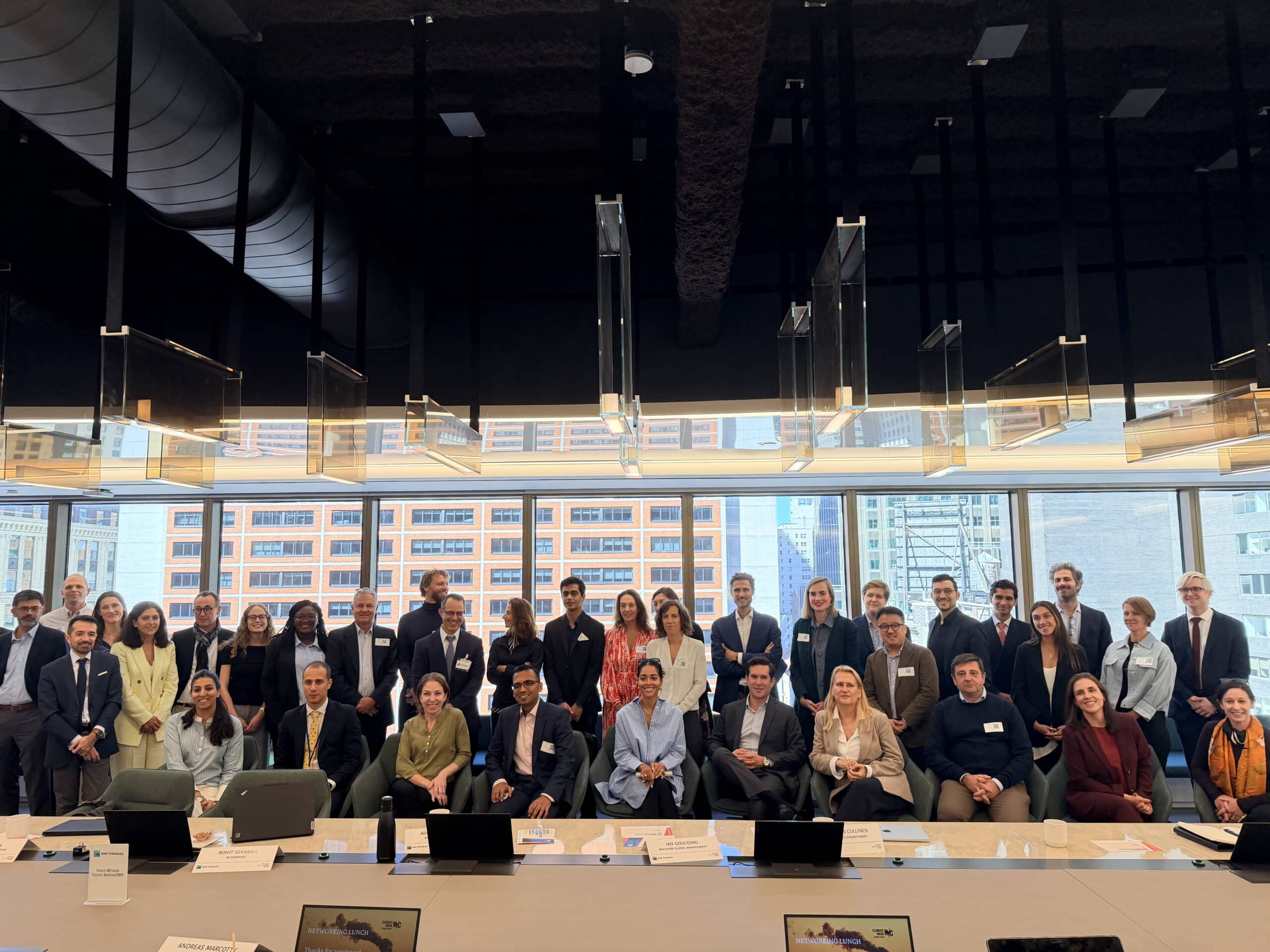
At a New York Climate Week roundtable convened by CCSI, UNIDO and the GCCA and hosted by BNP Paribas, investors, cement producers, development financiers and government representatives gathered around a deceptively simple proposition: the technology to decarbonize cement works, the economics increasingly work, and what’s missing is the machinery to turn that into bankable projects at scale. The roundtable was a pre-launch of UNIDO’s Global Decarbonization Investment Accelerator (GDIA), now moving toward its official launch at COP31.

A few key takeaways
UNIDO opened with the proof point: in Brazil, about $15 million of grant support to prepare the policy environment helped unlock more than $300 million in concessional finance now moving into industrial decarbonization — the difference between funding one plant and building a pipeline.
The technology isn’t the roadblock. As the session was framed, the investment case depends on understanding the sectoral roadmap and its actionable levers over time, the dependencies around them — from energy and policy to cost of capital and supply chains — and what it takes to make solutions investable at scale. Panelists from research and the cement sector made clear that the near-term levers — leaner design, a lower clinker factor through SCMs and blends like LC3 — are proven, scalable and cost-effective today, and most urgent in the markets where cement demand is still climbing. And the window is now: in those fast-growing markets, much of the next few decades’ cement capacity is about to be built.
What’s missing is execution, at a scale that’s easy to underestimate. As one investor put it, hitting 2050 means building the equivalent of one and a half to two plants every week for the next 24 years. This is not something any one actor delivers alone, and not one bespoke deal at a time. It takes an assembly line: standardized projects and data, capital ready before the project is, and policy, finance and industry pulling together.
As UNIDO laid out, the binding constraint is coherence, between roadmaps, policy and financial regulation that don’t yet speak to one another. The Global Decarbonization Investment Accelerator (GDIA) turns plant-level data, technology pathways and a government’s own priorities into a single investment plan the government owns, industry backs, and a bank can actually underwrite. It starts with cement and the energy system it depends on, and the same engine extends to the other hard-to-abate sectors.
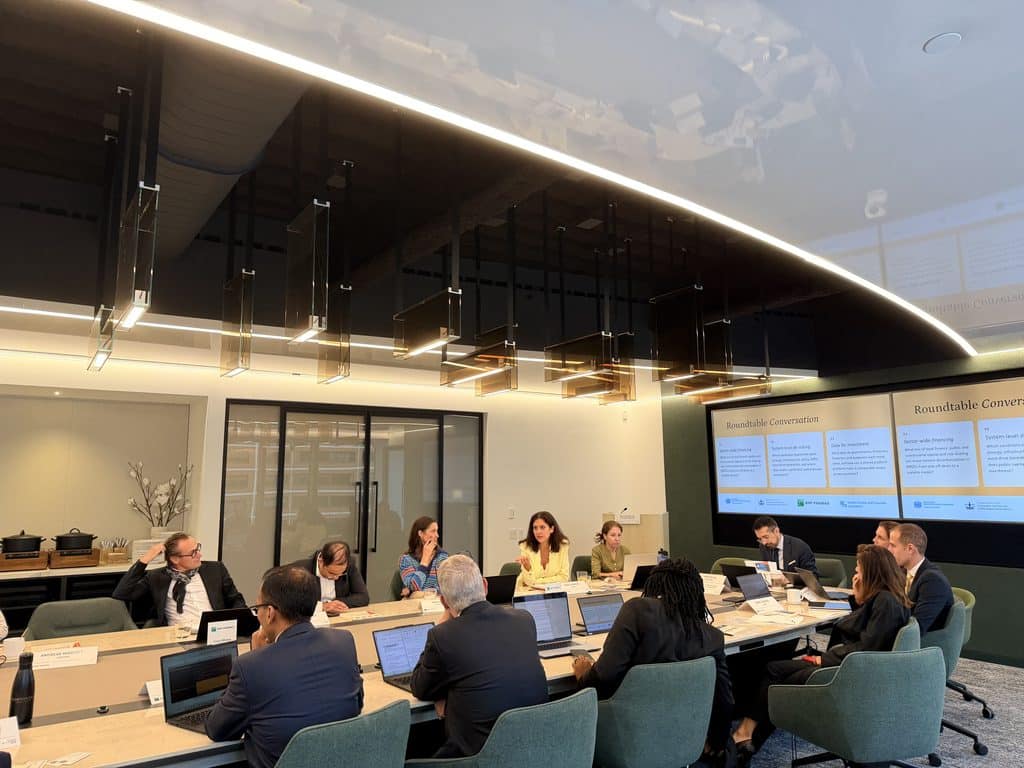
A summary of the open discussion and what it surfaced
On funds versus flagships, we saw broad appetite for pooling capital across many projects instead of one-off flagships with no follow-on – and getting specific on what types of risk each kind of capital can bear. We discussed building the transactional experience that drives risk and cost down the way solar did; and more than one voice asked the question of where philanthropy fits if the case is this strong.
Bankability usually gets decided outside the factory. Examples from adjacent sectors illustrated this further: renewables became bankable when buyers guaranteed long-term offtake, giving banks secure revenue; electric fleets made financial sense once route and cost data made the long-term economics legible. The same logic applied to cement: infrastructure, policy, data and finance have to arrive together, or none of them work. For example, without standards and building codes that allow low-carbon cement, there’s no market for a bank to underwrite.
On data, the gap is risk perception and scale: at two plants a week, bespoke plant-by-plant due diligence would take hundreds of years, not the time we have — so the answer isn’t more disclosure, but standardized, decision-ready data financiers can pull off the shelf the moment a deal appears. The MRV framework has to be usable by smaller producers, not just the big players — and communities and young people need access to that data too. But the room resisted data for its own sake: it has to keep environmental liabilities visible across a project’s life, so a depleted asset can’t be sold on cheaply with its liabilities left to communities.
A closing reflection drew the thread together: our persistent failure is to analyze parts of a system and mistake them for the whole — and almost no institution is mandated to take the systems view. That understanding is undervalued and underfunded, yet it’s precisely what reveals the few points where risk-bearing capital can tip a system into commercial viability, rather than being spread thin across it. The aim, in the end, is to get these projects to stand on their own — where low-carbon cement is simply the better investment, and capital flows because the numbers work.
The accelerator the roundtable previewed is being built to address the gap the room kept circling: not a shortage of capital or technology, but the coherence to turn them into bankable projects. It launches at COP31 this November, and CCSI and UNIDO welcome partners interested in shaping what comes next.