A Specialized Guarantee Facility for Industrial Decarbonization: The Case for a Dedicated, Pooled Risk-Sharing Instrument
This blog was originally published on Illuminem, and has been co-authored with Rhian-Mari Thomas. She is the CEO...
This blog was originally published on Illuminem, and has been co-authored with Rhian-Mari Thomas. She is the CEO...



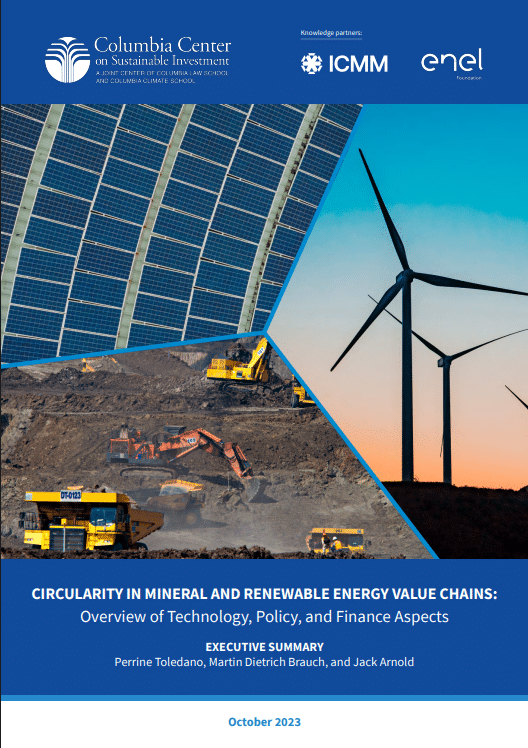
The global transition to renewable energy systems will be mineral intensive and, under the current linear economy conditions,...


Mining, Metals and Resource-based Development
Natural resource-producing countries increasingly believe that raw materials should be processed domestically rather than being exported in its unprocessed form. Downstream beneficiation is considered an opportunity to develop the domestic economy by creating jobs, enhancing skills and diversifying the economy. Large incentives are often offered to investors to build ‘first degree’ downstream industries such as steel plants, aluminum smelters, or oil refineries. As of 2016, little had been written about the prerequisites for such policies to succeed and the extent to which downstream beneficiation achieves the intended economic and social goals. CCSI conducted case studies to fill this gap.
The case studies of Australia, Japan, Oman, South Africa and Ukraine assessed the economic prerequisites and policy measures that have been used to attract investment in the steel industry. This cross-country assessment analyses the factors underlying the emergence of a steel industry since 1980.
The case studies of the Netherlands, Nigeria and Singapore conducted a similar assessment in the petroleum sector.
Drawing on this research and adding the case studies of Botswana and Indonesia, CCSI provided the Inter-Governmental Forum with guidance on how to develop downstream policies. The summary findings have been published as a stand alone brief and feed into the broader guidance on local content.
See CCSI’s research on other ways to leverage extractive industries to enhance the economic capability of the host countries via our pages on Local Content Laws and Contractual Provisions, Employment from Mining and Investments in Land for Agriculture, Fostering Knowledge and Technology Spillovers of Extractive Industries, and Conceptualizing Economic Linkages to the Resource Sector. Also see our pages on the Mine of the Future to understand the future of linkages under automation, and the impact of trade and investment treaties constraining the policy space on linkage creation.
Document