Diagnosing how the sovereign ceiling functions as a simplifying shortcut that can obscure meaningful differences across borrowers, and proposing an alternative credit rating approach based on disaggregating sovereign risk into specific transmission channels.
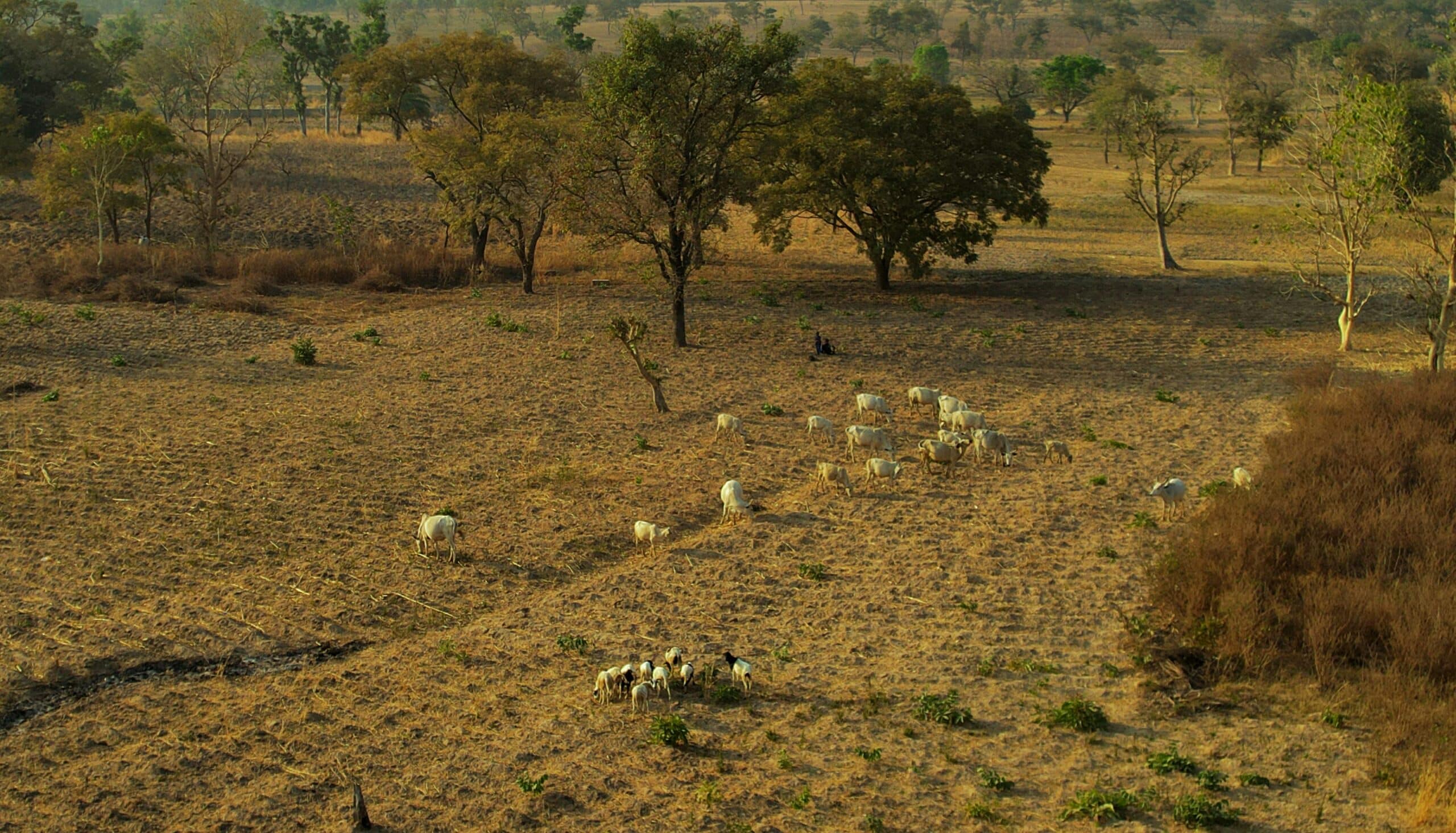
CCSI’s Executive Training on Sustainable Investments in Agriculture provides an interdisciplinary approach to addressing the challenges and opportunities of agricultural investments. The program is designed to equip participants with the necessary knowledge and skills to address some of the key challenges posed by international investments in agriculture, and to encourage a rich dialogue about practices from around the globe.
Who Should Attend?
This interdisciplinary program is for mid-level public officials and civil society representatives from low- and middle-income countries working on investment, agriculture, land, or rural development.
Please Note: Select participants from development agencies, foundations, intergovernmental organizations, UN agencies, and the private sector may also be admitted.
We had the chance to exchange ideas, share success stories, and learn from the unique perspectives of our peers.
Vivion Scully, CEO, Agro-Investment Corporation of Jamaica
Those delivering the training were experts in their field, and more than willing to provide participants with assistance to make the learning experience fruitful. Great technical resources were also provided to participants.
Jeremy Agyemang, Head of Agribusiness Unit, Ministry of Food and Agriculture, Ghana
The ideas we exchanged enhanced my understanding of the many factors that affect the governance of agricultural investments . . . I also appreciated how gender was addressed in several training modules; it was great to be part of a training with a strong dedication to discussing gender issues.
Mary Ndaro, Coordinator, Land Rights Program, CARE International
“The training course is fantastic, and certainly fulfilled my expectations. Since returning to Sierra Leone, I have already engaged with my colleagues and other institutions to implement solutions proposed and discussed during the course.”
Syl-Brians Kamara, Deputy Director, Environment Protection Agency, Sierra Leone
“The training was very insightful. I would recommend this course to anyone dealing with agricultural investments in their work, particularly given the holistic approach and range of topics covered. Big thanks to the team and excellent faculty!”
Naa Oyoe Quartey, Senior Agricultural Officer, Women in Agricultural Development Directorate, Ministry of Food and Agriculture, Ghana
“I would recommend this course for everyone working on land issues and agro-investments. The lecturers were highly knowledgeable, and the diverse group of participants (coming from various geographic regions and backgrounds, ranging from civil society to the private and public sectors) made for insightful discussion. I particularly enjoyed putting theory into practice using case studies each day. The training also provided a great opportunity for networking.”
Sigrid Stensrud Ekman, Private Sector Advisor, NIRAS / Agricultural Sector Development Support Programme (ASDSP), Ministry of Agriculture, Livestock and Fisheries, Kenya
When and how will the training be delivered?
The training will take place from May 11 – 20, 2026.
The entire 2026 program will be held online.
The virtual training will include asynchronous and synchronous learning and peer-to-peer sharing components:
Short and interactive live training sessions will take place each business day from May 11 – 20. These sessions will be dedicated to engagement with course lecturers and practitioners, and to peer-to-peer sharing. A detailed schedule of live sessions will be shared with participants in early 2026.
Background materials for each training topic, including video presentations and readings, will be shared with participants through a dedicated course platform and available for review by participants in advance of the live sessions.
This deadline has been extended.
Applications will be considered on a rolling basis until April 3, 2026. We encourage applicants to apply early in order to secure a place.
What are the program fees?
The training will be made freely available to accepted participants who fall into the following categories:
Civil society organizations / non-profit organizations (must be registered as a non-profit in your jurisdiction) of any income status
Government officials from low- and middle-income countries
A program fee of USD $500 applies to all other accepted participants, including those who fall into the following categories:
Government officials from high-income countries
Private sector
Funders (including bilateral development agencies and foundations)
UN agencies
Intergovernmental organizations
Please note that CCSI adheres to the following cancellation and refund policies for all executive trainings:
Cancellation with 30-days notice: for cancellations made within 30 days prior to the scheduled event, no refund will be allowed for any reason.
Cancellation with 60-days notice: for cancellations made within 60 days prior to the scheduled event, the $500 fee will be refunded.
Cancellation by CCSI: CCSI reserves the right to cancel any event at any time. Should this take place, a full refund will be offered.
Through an interdisciplinary lens, the program equips participants with the tools to navigate land rights, food security, climate risks, and community impact — while fostering global dialogue on more equitable and sustainable approaches to investment.
The virtual training will include asynchronous and synchronous learning and peer-to-peer sharing components:
Short and interactive live training sessions will take place each business day from May 11 – 20. These sessions will be dedicated to engagement with course lecturers and practitioners, and to peer-to-peer sharing. A detailed schedule of live sessions will be shared with participants in early 2026.
Background materials for each training topic, including video presentations and readings, will be shared with participants through a dedicated course platform and available for review by participants in advance of the live sessions.
The course draws primarily from among faculty and experts at the Climate School and Law School at Columbia University. Outside experts also teach specific topics related to their expertise. Faculty from past trainings have included:
Senior legal, economics, and technical staff of CCSI
Luiz Amaral, Director, Global Solutions for Commodities and Finance, World Resources Institute
Ward Anseeuw, Senior Technical Specialist (Knowledge, Learning and Innovation), International Law Coalition; Research Fellow, CIRAD
Matthew Baird, Director, Asian Research Institute for Environmental Law
Walter Baethgan, Senior Research Scientist, Head of Regional and Sectoral Research, International Research Institute for Climate and Society (IRI)
Joseph Bell, Of Counsel, Hogan Lovells US LLP
Karol Boudreaux, Senior Land and Resource Governance Advisor, USAID
Ben Bowie, Director, TMP Systems
Anna Bulman, Partner and Director, Change Collective
Sonkita Conteh, Director, Sierra Leone Program, Namati
Benjamin Cousin, Group Sustainability Manager, Illovo Sugar Africa
Esther Delbourg, École Polytechnique
Heather Eisenlord, Human Rights Director, ISLP
Laura Eshbach, Director of Corporate Engagement, Landesa
Joshua Fisher, Director, Advanced Consortium on Cooperation, Conflict, and Complexity
LauraGerman, Associate Professor, Department of Anthropology and Center for Integrative Conservation and Research, University of Georgia
Bruce Gilchrist, Partner, Hogan Lovells US LLP
Alejandro Guarin, Food Systems Transformation, World Benchmarking Alliance (WBA)
Leslie Hannay,Senior Land Tenure Specialist, Corporate Engagement, Landesa
Clotilde Henriot, Food Systems, Ocean and Land Use Expert
Michael Jarvis, Executive Director, Transparency & Accountability Initiative
Kiersten Johnson, Monitoring and Evaluation Advisor, USAID Bureau for Food Security
Jon Lindsay, Lead Counsel for Land and Natural Resources, Environmental and International Law Practice Group, World Bank
Noah Mardirossian, Senior Researcher, Danish Institute for Human Rights
Simon Mason, Senior Research Scientist, Climate, Disasters, International Outreach, International Research Institute for Climate and Society
Tiernan Mennen,Vice President, Governance and Rights, Abt Associates
Ángel G. Muñoz, Associate Research Scientist,Climate Variations and Predictability, International Research Institute for Climate and Society
Mark Musumba, Associate Research Scientist, Agriculture and Food Security Center, Earth Institute, Columbia University
Carolyn Mutter, International Program Manager, Agricultural Model Intercomparison and Improvement Project (AgMIP)
Katie Minderhoud, Learning Advisor, Solidaridad Europe
Kindra Mohr, Associate Director, Financial Services and Human Rights, BSR
Doina Popușoi, Technical Officer on Agroecology and Sustainable Food Systems, International Fund for Agricultural Development (IFAD)
Amanda Richardson, Co-Founder and Program Director, Resource Equity
Beth Roberts, Director, Center for Women’s Land Rights, Landesa Rural Development Institute
Cynthia Rosenzweig, Senior Research Scientist, NASA Goddard Institute for Space Studies
Delilah Rothenberg, Founder, Development Capital Strategies
Alex Ruane, Research Coordinator and Climate Team Lead, Agricultural Model Intercomparison and Improvement Project (AgMIP), NASA Goddard Institute for Space Studies
TessRusso, Senior Program Officer, Agricultural Development, The Bill & Melinda Gates Foundation
Jeffrey D. Sachs, Director of the Center for Sustainable Development, University Professor at Columbia University, and Senior UN Advisor
Eleanor Thompson, Founder, Citizens’ Barray
Darryl Vhugen, Land Tenure Consultant
Nana Ama Yirrah, Founder and Executive Director, COLANDEF
Sponsors
Partial support for the 2026 training is provided by ALIGN. ALIGN supports governments, civil society, communities and peoples, and other relevant actors in strengthening the governance of land-based investments.
The project is implemented by a consortium led by the International Institute for Environment and Development (IIED), the Columbia Center on Sustainable Investment (CCSI) and Namati, and is funded with UK aid from the UK government. However, the views expressed do not necessarily reflect the official views or policies of ALIGN partners or the UK Government.
If you have any questions about the program or if you would be interested in sponsoring participants for the 2026 program, please contact us at CCSI-Trainings@climate.columbia.edu.