Time and Compromise in UNCITRAL’s Working Group III
During the week of 22 September 2025, States once again met in Vienna under Working Group III (WGIII)...
During the week of 22 September 2025, States once again met in Vienna under Working Group III (WGIII)...


The global transition to renewable energy systems will be mineral intensive and, under the current linear economy conditions,...


This piece was originally published on EJIL: Talk!
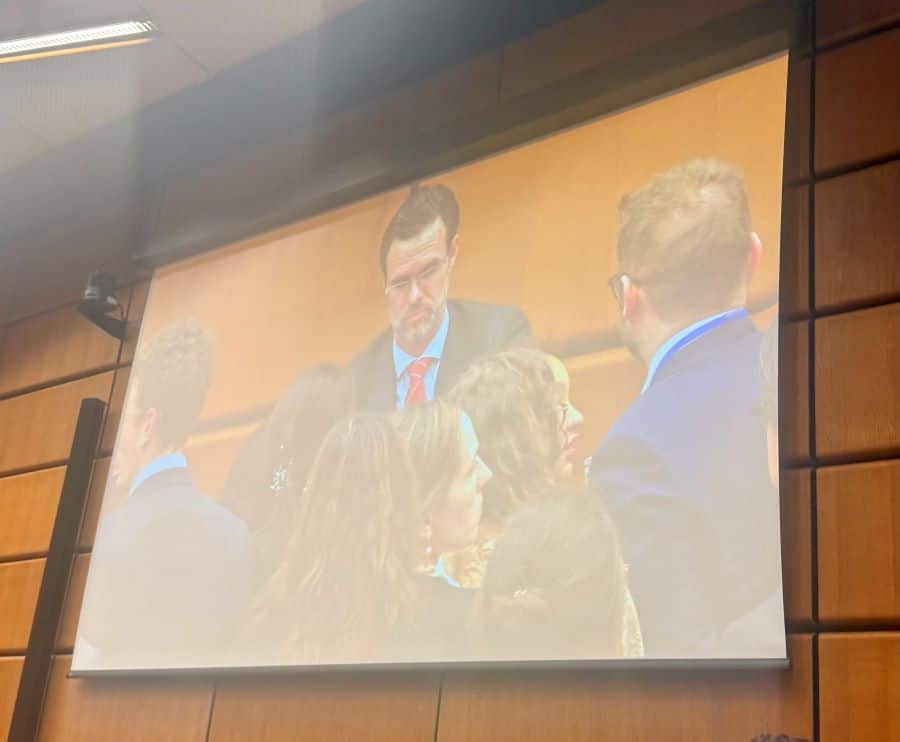
The 53rd Session of UNCITRAL Working Group III (WGIII), held in mid-January 2026 in New York, marked another modest but revealing step in the long road toward reforming investor–State dispute settlement (ISDS). The meeting delivered some progress, particularly in clarifying what kind of legal instrument(s) might eventually emerge from the cluster of partially linked reform options grouped together for discussion as “procedural and cross-cutting issues”. It also underscored the growing pressure of time, the tension between ambition and deliverables, and the complexity of managing divergent State positions and shifting coalitions. These three themes are deeply interconnected, each shaping and constraining the others.
The session unfolded amid the fallout from the United States’ abduction of Venezuelan President Nicolás Maduro, a flagrant violation of international law that took place a week earlier. President Trump justified this abduction, at least in part, by invoking Venezuela’s earlier expropriation of U.S. oil companies and its failure to comply with ISDS awards ordering compensation to those investors. While the use of abduction as a complement to, or substitute for, ISDS did not surface in the Working Group’s formal deliberations, it was a recurring theme in informal discussions in the margins. We return at the end of this post to the relationship between WGIII’s work and this broader geopolitical context.
The 53rd Session began with a familiar rhythm. WGIII resumed its work on the procedural and cross-cutting issues (WP 253 and WP 262), proceeding sequentially through the Draft Provisions (DPs) from where it had left off in September 2025. Readers of EJIL: Talk! may recall that WGIII started almost nine years ago by mapping the various “concerns” with ISDS, which were gradually rationalised into a work programme organised around a set of potential “reform elements”. Some incremental reforms have now been adopted, notably, a new code of conduct for arbitrators in ISDS disputes and a statute for an Advisory Center on international investment disputes to support developing countries.
Work on structural reform, such as the EU’s proposal for a standing first-tier multilateral investment court and an associated appellate mechanism, remains ongoing and will be the focus of the March 2026 session. By contrast, the “procedural and cross-cutting issues” reform element is a grab-bag of proposals that do not fit neatly elsewhere, ranging from modest clarifications to ISDS procedure — for example, codifying tribunals’ powers to bifurcate proceedings — to more far-reaching changes, such as requiring exhaustion of local remedies before ISDS can be initiated, limiting indirect shareholder claims, and clarifying the scope of damages that investors may recover for treaty breaches.
This sequential approach gave the work on procedural and cross-cutting issues a logical structure, but it also had important side effects. Because the document begins with relatively technical procedural provisions, most of the week was spent on issues that, while largely uncontroversial, are of limited strategic significance. These included rules on allocating the costs of ISDS proceedings between the disputing parties (DP 9), voluntary consolidation of arbitrations (DP 11), and disclosure of third-party funding (DP 12). This sequencing effectively deferred discussion of the more consequential reforms, including the provision on the assessment of damages and compensation, to a later date that may never materialise . (Disclosure: both authors have argued that reform of damages in ISDS should be a priority for WG III, see, e.g., here.).
The emphasis on items that could be finalised quickly also reflected an implicit urgency: a shared sense that something must be ready to present to the Commission in July 2026. This deadline-driven pragmatism culminated midweek in agreement on the form that several procedural provisions would take, while also highlighting how time pressures can shape outcomes by privileging what is feasible over what is transformative. With only a few sessions remaining, the risk is now clear: without creative scheduling or renewed political momentum, WGIII may complete its work on only some of the reform elements, falling short of the deeper reform ambitions that originally animated the process.
One of the more consequential developments of the 53rd Session was the long-deferred decision on how to structure the draft procedural and cross-cutting provisions. In a process where progress depends on achieving consensus among participating States, questions of form affect both how provisions are drafted and how politically acceptable they are.
One option was to draft the provisions on the conduct of ISDS proceedings as a supplement to the UNCITRAL Arbitration Rules. Investment treaties generally allow foreign investors to choose which set of procedural rules will govern an ISDS proceeding, and roughly one-third of them opt for the UNCITRAL Rules. In principle, a new supplement could be drafted so that a reform package agreed to in WGIII would apply whenever the underlying investment treaty refers to the current version of the UNCITRAL Arbitration Rules (rather than, for instance, the 1976 or 2013 versions), provided the investor chooses UNCITRAL arbitration. This option would also allow for alignment with the ICSID Arbitration Rules, which govern roughly 60% of all ISDS cases and were updated in 2022 to address many of the same procedural issues. Another option was to draft all the procedural and cross-cutting provisions as treaty provisions, to be included in a Protocol to the Multilateral Instrument on ISDS Reform (MIIR). Even if adoption by WGIII confers some minimal normative legitimacy on such treaty provisions, they would only bind States that become party both to the MIIR and to the relevant Protocol containing the treaty provisions in question.
By midweek, WGIII reached consensus that DPs 1–9, 11, and 12, which address the conduct of ISDS proceedings, should move forward as a single package—an integrated supplement to the UNCITRAL Arbitration Rules, drafted in treaty language to allow implementation as a Protocol to the MIIR or be used in any future multilateral investment court. As with the 2013 UNCITRAL Rules on Transparency in Treaty-based Investor-State Arbitration, the new supplement would not automatically apply to ISDS proceedings arising under pre-existing investment treaties, allowing States that oppose it to avoid its application. In short, no State that opposes any of the reforms developed under the “procedural and cross-cutting issues” heading would be bound by them, whether through an automatic revision of the UNCITRAL Arbitration Rules or through their application as treaty provisions in a Protocol to the MIIR.
This dual-track approach was a turning point. By bundling the draft provisions on the conduct of ISDS proceedings into a single package, States mapped out a path to present a concrete deliverable to the Commission in July 2026, sidestepping prolonged debates on optionality and selective adoption, and enabling cross-referencing and coherence in the drafting of the DPs within the package. At the same time, this resolution underscored the increasingly modest ambitions of a multilateral process that many States joined in 2017 out of a desire to reform a flawed system. A process that had started with debates about structural biases within ISDS is now focused on a document that largely seeks to align the UNCITRAL Arbitration Rules with recent updates to the ICSID Arbitration Rules.
Settling questions of form also unblocked negotiations on issues that will not be part of the supplement to the UNCITRAL Arbitration Rules. For instance, DP 22 proposes to give a non-disputing treaty party (typically, the investor’s home State) the right to make submissions in ISDS proceedings. This right is practically important because tribunals have often interpreted investment treaties expansively, well beyond what either State party to the treaty intended. This right is already reflected in the 2022 ICSID Arbitration Rules, the 2013 UNCITRAL Transparency Rules, and many investment treaties. Where a non-disputing treaty party has exercised this right, it has generally done so to support the Respondent State’s interpretation, rather than to back more expansive claims advanced by its own investors.
Among the many issues on WGIII’s agenda, this might have seemed a likely candidate for consensus. Yet, several States—most prominently the Russian Federation, Thailand, and India, all non-ICSID members—signaled that they were not prepared to be bound by such a rule. Once it was agreed that DP 22 would proceed as a treaty rule in an opt-in Protocol to the MIIR, these States could simply stand aside, allowing drafting to proceed. This outcome underscored a pragmatic truth of the WGIII: questions of form can partially depoliticise the process of negotiation by clarifying which commitments will bind which States.
The politics of the 53rd Session revealed the limits of familiar narratives about ISDS reform. Many of the coalitions seen in previous sessions were still visible—Latin American States often intervened in support of each other, calling for more ambitious reform; Canada, Japan, Singapore, the UK and the USA tended to emphasise incremental procedural changes; and the EU and its Member States spoke largely with one voice, focused on ensuring that the draft provisions remained coherent with their parallel work on a standing first-tier multilateral investment court and appellate mechanism. At the same time, disagreement on several issues did not neatly follow North–South divides or the classic incremental-versus-systemic reform dichotomy.
For example, over many years, India has often argued within WGIII for more sweeping reform. In this session, however, it strongly opposed DP 22, which deals with submissions by non-disputing treaty parties in ISDS. India’s position was rooted in its experience at the WTO, rather than in ISDS practice itself and stood in sharp contrast to the U.S. support for the provision, which reflects U.S. practice under the NAFTA (and now USMCA), and increasingly under other treaties.
Debate on DP 10, a provision designed to make it easier for host States to bring counterclaims against foreign investors in ISDS, likewise revealed some surprising bedfellows and divisions. The context to the discussion is that many States have struggled to bring counterclaims against investor-claimants—whether for environmental harm, human rights abuses, or more routine breaches of contractual obligations owed to State entities—because tribunals have often found such counterclaims to fall outside their jurisdiction or to be insufficiently connected to the legal and factual issues underlying the investor’s original claim. In this context, Latin American States strongly defended language in DP 10 that referred to investors’ obligations under “domestic law” as a valid basis for State counterclaims. While some States voiced reservations about explicitly referencing domestic law, the Chair noted that any State uncomfortable with bringing counterclaims based on alleged violations of its own domestic laws could simply choose not to bring them.
Despite this, Israel and the EU and its Members States expressed sustained objections to retaining an express reference to domestic law in the text. Their concern did not appear to be opposition to counterclaims as such, or to other States bringing domestic-law-based counterclaims against their investors. Rather, it seems that the EU’s position stems from the constitutional constraint articulated by the CJEU in Komstroy, which limits ISDS tribunals’ ability to interpret or apply EU law. The observer from the American Society of International Law reminded delegates that ISDS tribunals regularly resolve issues by recourse to domestic law—for example, in determining the scope of the investor’s rights that constitute the “investment” at issue in a case, or whether the investment in question was made lawfully. But the observation that recourse to domestic law in ISDS is both necessary and inevitable was not enough to reassure the EU or Israel.
This disagreement led to a deadlock on Tuesday morning. Nonetheless, there was enough goodwill to reach language that everyone could live with. The explicit reference to domestic law was dropped, with the final text referring only to a “legally binding instrument to which the respondent is a party” as an illustrative source of obligation that could form the basis of a counterclaim. This formulation was understood to advance the objective, shared by many developing countries, of making counterclaims more feasible in practice, and without foreclosing the possibility that counterclaims could be based on domestic law for States that accept that practice.
This spirit of pragmatism, however, remains bounded by time and resource scarcity. The cumulative effect of these constraints became most apparent in the week’s closing discussions, when the US delegation announced that it could not endorse the reallocation of Working Group VI time to allow additional WGIII work in April, effectively closing off one of the few realistic options for catching up on deferred issues.
The 53rd Session reaffirmed that WGIII’s calendar has become a reform actor in its own right. Time pressures now drive sequencing choices, influence the level of drafting detail, and shape perceptions of what qualifies as a deliverable. These pressures also create incentives to endorse formally non-binding texts largely to signal progress, a dynamic already visible in debates on the draft toolkit on investment dispute prevention and mitigation.
The handling of damages at this Session illustrates how time constraints shape the substance of discussions. Nigeria and Viet Nam had tabled a substantive submission on damages (WP 261), and many States arrived in New York ready to engage with it, especially after an online event where three experts discussed the proposal with the authors. Yet the push to finalise the supplement to the UNCITRAL Arbitration Rules meant that the Working Group had no time to take up that submission. At the same time, the Guideline on Damages (WP 255) clearly remained on the table, serving as the focus of an informal lunch event on damages convened by Canada, with the Guideline’s author in attendance. The 20-page text aspires to restate customary international law on remedies in ISDS, but is largely a compendium of existing ISDS practice and does not cite a single decision of the International Court of Justice. It also appears to contain doctrinal errors — a point flagged by the US delegation at the intersessional meeting in Santiago, which noted that some elements of a claim that an investor is required to establish to recover damages are mischaracterised as “defences” available to a State. A carefully revised Guideline could still make a constructive contribution, but under current time constraints there is a real risk that delegations will be pushed to accept an under-scrutinised instrument that effectively endorses many of the troubling ways in which ISDS tribunals have departed from customary international law.
As the process moves toward the March meetings and the July 2026 Commission Session, the space for genuinely ambitious reform is narrowing. WGIII’s achievements to date are tangible, but so too are the shadows of what may remain unfinished or be papered over. The 53rd Session thus offered both a measure of progress and a cautionary illustration of how institutional timing, drafting form, and an uncertain web of partially overlapping issue-based coalitions of States together delimit the horizon of ISDS reform.
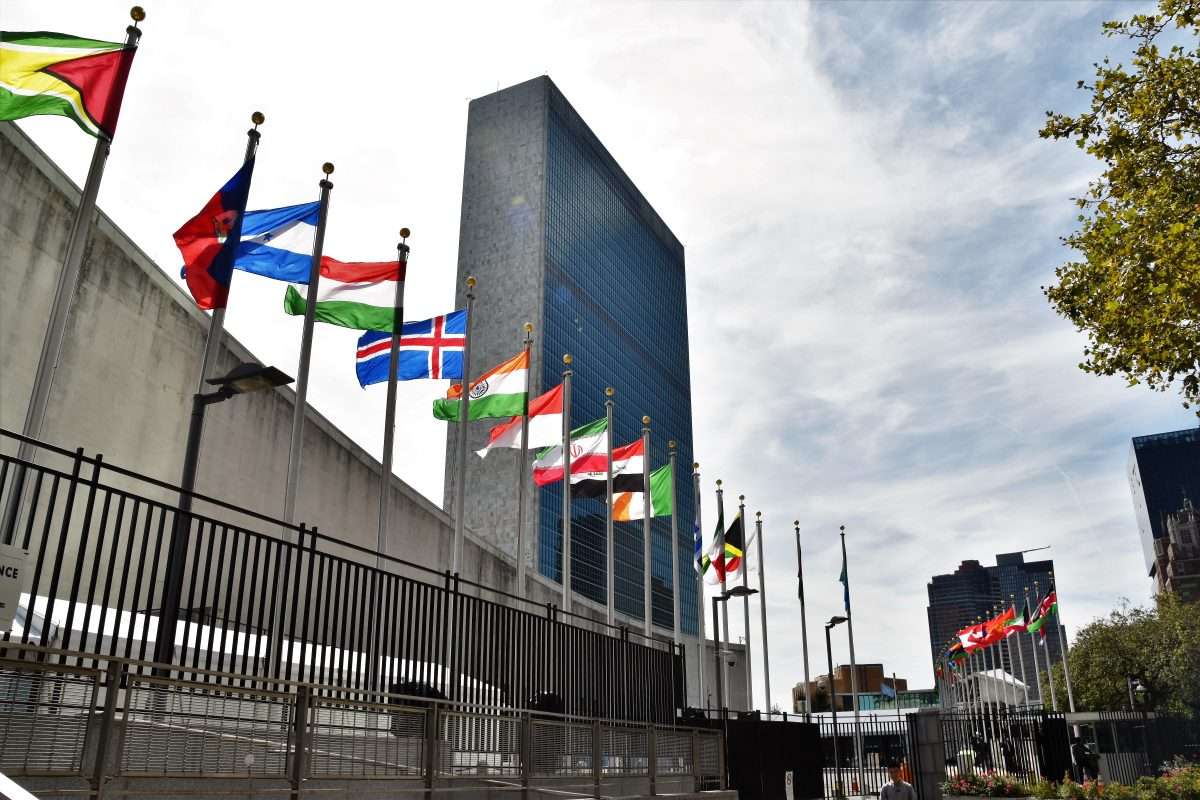
Finally, we return to the dissonance noted at the outset of this blog—the experience of sitting in the UN building on a Wednesday afternoon engaged in contested discussions about the appropriate scope of disclosure of third-party funding arrangements in ISDS proceedings (DP 12), while events outside the room point to a revival of a coercive and imperial politics of foreign investment. The most optimistic reading of this dissonance is to see WGIII as pursuing a counter-project: the renewal of a rules-based framework for resolving foreign investment disputes that might discourage States (and indeed, investors) from abducting foreign leaders, supporting coups, or engaging in corrupt dealings with local elites to secure their economic interests in the alleged absence of reliable domestic legal institutions.
We are less optimistic.
There is, of course, the well-documented, imperialist history of international investment law, the lack of evidence that investment treaties either “depoliticise” foreign investment disputes or contribute to good governance in any broader sense, and the inescapable fact that the existence of ISDS as a dispute-resolution mechanism did not prevent the United States from abducting Maduro. None of this is to defend abduction, corruption, or coups. The point is simply that it is not self-evident that the reforming and re-embedding of ISDS will necessarily deter such conduct.
More striking was the disconnect between the terms in which various reform options were discussed and the supposed objectives of ISDS as a system — encouraging foreign investment that improves the lives of people in developing countries, supporting good governance and strengthening domestic legal institutions, and building an international order in which coercive intervention is less likely. Returning to the discussion of DP 12, for example, we heard repeated interventions about the risks of unfairness to foreign investors if overly expansive third-party funding disclosure rules were to inadvertently reveal some aspects of an investor’s legal strategy in a particular dispute. Across the entire week, there was very little effort to link these and other necessarily technical discussions back to ISDS’s proclaimed purposes: fostering economic development, good governance, and non-coercion in international affairs. Perhaps the greatest tragedy of WGIII is that discussions in the room have become unmoored from any serious engagement with what those seeking to reform ISDS say that the system is for.