Time and Compromise in UNCITRAL’s Working Group III
During the week of 22 September 2025, States once again met in Vienna under Working Group III (WGIII)...
During the week of 22 September 2025, States once again met in Vienna under Working Group III (WGIII)...

The global transition to renewable energy systems will be mineral intensive and, under the current linear economy conditions,...


The Working Group III (WGIII) process at the United Nations Commission on International Trade Law (UNCITRAL) to reform investor–State dispute settlement (ISDS) is about more than drafting legal text for some hypothetical future scenario—it’s about real, tangible harms already being felt by many States, and the urgent need to reduce them. Since the process began in 2017, more than 500 treaty-based arbitration cases have been filed. States are shouldering crushing legal costs, massive damages awards, exposure to cost orders that go unpaid by claimants, and deep asymmetries when defending themselves. This isn’t about what may happen in the future—it’s about what is happening today. And WGIII has had many opportunities to meaningfully address those burdens.
Yet here we are, at the end of year eight: apart from the Code of Conduct, which includes only modest changes from the status quo, is not automatically applicable anywhere at present, and has no clear enforcement mechanism, and the statute of an as-yet-to-be-established-or-funded Advisory Center, none of the other critical reform issues have been finalized. WGIII continues to tinker at the margins. Powerful delegations from largely capital-exporting States, corporate representatives, and institutional actors are slowing meaningful progress—and crucially, do so without offering any compelling policy reason why proposals that could minimally protect developing countries in this asymmetric regime should be rejected.
Here are a few observations from the September 2025 session.
The WGIII process starkly illustrates how asymmetric power is baked into the very architecture of multilateral negotiations. The formal rules of such institutions often presume equality among States—especially in consensus procedures—but in practice, a small set of powerful delegations and institutional actors routinely wield outsized influence. When those actors imply that less powerful delegations should be grateful for the inclusion of something (merely because it did not exist previously and regardless of its form or substance), they expose just how unequal the setting really is.
In the same lines, there is a recurring pattern of strategic pressure; statements like, “If you don’t compromise, there will be no draft provision.” This is not just rhetoric; it is a deliberate tactic to coerce less powerful States into accepting weaker outcomes. It amounts to a take-it-or-leave-it posture by the hegemon. The ones pressing hardest for real change are the ones most exposed to the risks of these threats. Meanwhile, those who already benefit under the current system (including their investors and their arbitration and legal industries) suffer no loss if a reform provision is omitted or softened. In effect, there is no incentive for them to compromise, only to preserve their objections to reform based on the prospect that doing so will either result in no “reform” provision or a “reform” provision that essentially codifies the problematic status quo that delegations have ostensibly gathered to change. Even the rhetoric of “compromise” becomes a barrier to substantive reform, a smokescreen behind which imbalance is preserved.
Under the veneer of “balance,” minimal but meaningful protections are being resisted. A good example is the debate over the scope of the Security for Costs (SfC) provision, draft provision 5 (DP 5) of Working Paper 253 (WP 253). Many respondent States have legitimately asked for a rule that lets tribunals require a claimant to post security, especially in situations where there is a genuine risk the claimant will be unable or unwilling to pay an adverse cost order. This isn’t just a theoretical problem faced by States. In practice, States often struggle to recover cost awards from claimant investors, forcing them to absorb both the legal costs and the burden of defending ISDS claims.
Yet, a minority of (more powerful) delegations pushed to extend the same burden onto respondent States if or when they raise counterclaims. They argued that there is “no principled reason” to treat counterclaims differently and asserted that the drafting must remain “neutral” in form—even though the risks and financial realities are asymmetric. States are rarely insolvent; the policy justification for SfC is precisely to manage the imbalance in enforceability and risk. For many budget-constrained low- and middle-income States, even the prospect of a multimillion-dollar cost order could deter them from filing legitimate counterclaims. Several delegations also emphasized that most governments operate under rigid public budget systems, which make it practically impossible to allocate funds in advance for such securities. Extending SfC obligations to States, then, is not neutrality—it’s an inversion of purpose.
When structural asymmetries are this entrenched, calls for “equal treatment” risk entrenching inequality rather than redressing it. Negotiators should be wary of balance as rhetoric: invoking equality without recognizing the underlying imbalance does not create fairness—it simply preserves the status quo under a different name.
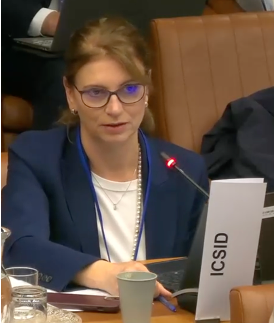
There is excessive deference to existing institutional standards, especially ICSID’s 2022 Arbitration Rules. In WGIII, member States have been asked to defer to the ICSID delegation repeatedly: to look to ICSID’s procedural text for guidance, to accept its logic, to assume its effects in cases initiated after 2022, and even to replicate its approach wholesale. If there is an implicit assumption that ICSID is the gold standard, why not simply copy-and-paste its 2022 Rules into UNCITRAL’s revised Arbitration Rules?
To be fair, ICSID spent more than five years revising its Rules, engaging in public and member State consultations. But the process, the membership involved, and the institutional context differ from those of WGIII. Many States in WGIII were not part of or fully aligned with ICSID; their vulnerabilities and starting positions are different. Moreover, ICSID launched its amendment process “to modernize, simplify, and streamline the rules, while also leveraging information technology to reduce the environmental footprint of ICSID proceedings.” These objectives do not address the core concerns that WGIII was established to tackle: legitimacy, fairness, and the structural inequities of the ISDS system.
At the September session, only one delegate—the EU, speaking on its own behalf and its Member States—explicitly cautioned against this deference. The EU noted that “having a strict goal of aligning these rules with ICSID rules is not necessarily something that we would want.” Yet despite that intervention, WGIII continues to move toward procedural texts that mirror ICSID’s approach, often at the expense of stronger safeguards for respondent States.
One visible case is the treatment of third-party funding (TPF) in relation to SfC. Under ICSID’s Rule 53 (2022), tribunals must consider a list of “relevant circumstances,” including a disputing party’s ability to comply, willingness to pay, and conduct, and the effect of requiring security on the party’s ability to pursue the claim (Rule 53(3)), as well as the existence of TPF alongside those relevant circumstances (Rule 53(4)). By contrast, WGIII’s earlier draft (WP 244) proposed in DP 5 that TPF appear as a standalone criterion for the tribunal to consider when deciding SfC requests. A minor shift, but potentially an important one for certain delegations.
Unsurprisingly, State delegations split on this, as is evident in their written submissions. Canada, the EU and its Member States, and Singapore proposed aligning with ICSID’s Rule 53(4), i.e., treating TPF as evidence in relation to the listed circumstances, not as an independent criterion. Others—including Argentina, Australia, Brazil, Chile, Colombia, Dominican Republic, Ecuador, Mexico, Panama, Switzerland, the United States, and an unidentified State—supported making TPF an independent factor to consider. Algeria and Viet Nam went further: they proposed making SfC mandatory when TPF is present.
The revised provision in WP 253, the version that was the basis of discussion in the September 2025 session, moves back toward the ICSID model: integrating TPF only in conjunction with the other listed factors rather than as a standalone ground or mandatory trigger. That raises some legitimate questions. Why did the revised draft reflect one set of countries’ preference over others? Does that represent true consensus, or simply the influence of power under cover of established rules? If WGIII is meant to reform, not just replicate, why are many proposals that might better protect States being chipped away or overridden in favor of institutional precedent?
Despite the heavy power dynamics and procedural jockeying in WGIII, there were genuine points of progress championed by reform-minded State delegations. During the debate over whether both claims and counterclaims should be subject to SfC orders, the draft was adjusted to include a default rule exempting States from SfC unless exceptional circumstances justify it. This may not seem significant, but it does recognize the asymmetry in resources and risk between States and claimants.
On the issue of pegging the consideration of TPF to other risk factors, WGIII decided to separate it into its own clause, which will also highlight a key factor that was critical to some countries, like Argentina and Viet Nam, namely, whether the funding agreement covers adverse orders for costs. In that respect, it preserves tribunal discretion: even if the funder promises to cover costs, the tribunal may still require the funded party to post security, because a promise by the funder is not the same as a guarantee from the claimant that the State will be paid. These developments are not perfect fixes and do not eliminate most risks, but they are baby steps in the right direction.
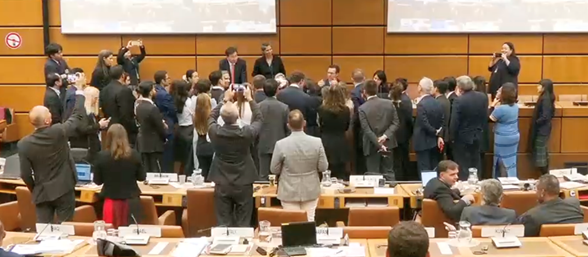
Consistent with past sessions, 2.5 days were devoted to procedural issues and another 2.5 days to structural reform, i.e., the standing mechanism(s). What made this session stand out is that, for the first time in eight years, WGIII was pushed to address and decide on the architecture itself: should there be a two-tier system housed in one institution or two distinct institutions (one for first instance, another for appeals)? How should ad hoc tribunal decisions be treated in this new framework? What should the jurisdictional scope be—limited to treaty-based disputes or extended to investment contracts? And should domestic laws that provide for international arbitration be implicated in any way? These foundational questions should have ideally been sorted out early on, but instead, they were repeatedly deferred while delegates tinkered with the drafting of the statute’s finer points. For many delegations, this felt like a misallocation of focus—not just this session, but across the entire reform effort.
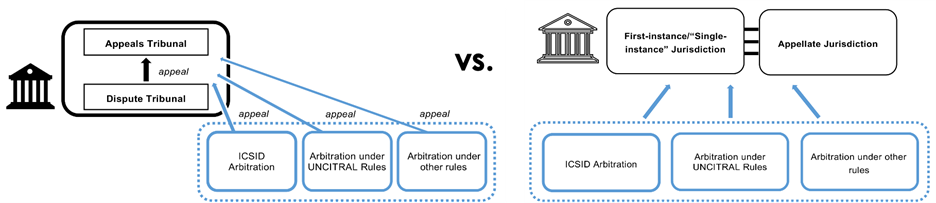
By week’s end, WGIII had to decide about how to move forward under tight time and budget constraints. With possibly only one week of deliberations left before the July 2026 UNCITRAL Commission meeting, delegates were asked whether the remaining time be devoted entirely to procedural issues or split with structural reform. The Chair suggested that WGIII had intended to present all the draft procedural rules (or at least part of those rules) to the Commission in 2025, but not having been able to do that, and now having fallen behind on those, there was some pressure to present something to the Commission in 2026, even a subset of the procedural rules. But it was clear that crafting two interlocking instruments for the standing mechanism(s) would require far more time and resources than a single week could realistically provide for meaningful debate, especially given the short window for redrafting.
As was predictable given the dynamics in the room, every net-capital exporting and frequent home State delegation that spoke about next steps pushed the narrative: “procedural issues took too long this week—at this pace, we’ll get nowhere.” The unstated implication was that if the next session is devoted solely to procedural issues, discussions must move faster, and at least some—if not all—of the procedural provisions should be finalized for presentation to the Commission in July. Even the Chair echoed this framing, pressing Panama’s delegate—who had bravely proposed focusing only on procedural issues—by asking whether the aim was to present outcomes to the Commission in the summer. The effect was to shift pressure onto the States calling for genuine reform of the procedural and cross-cutting rules—the very States most harmed by the current ISDS regime—rather than on those obstructing meaningful change.
That narrative, however, distorts what is really at stake. First, procedural debates are not distractions; they are the frontline where the most consequential trade-offs are made, especially by developing States. Moreover, these rules matter to the standing mechanism(s) as well, not just to ad hoc arbitration. Second, when the Secretariat intervened, it confirmed that the pace of discussion on procedural drafts this week was in fact on par with past sessions, i.e., there was no unusual delay. Yet, delegations from net-capital exporting countries persisted in blaming the slow progress on “procedural debates,” as though deaf to that fact. Finally, none of those same delegations acknowledged how lengthy and demanding the structural debates had become. The reason seems obvious: procedural rules have been weaponized. Powerful actors resist even modest reforms beyond the current ICSID framework, then recast the resulting slowdown as a justification to stall change altogether. It is not lost on most that these debates are the real terrain where power is contested and those delegations complaining of the slow pace are in fact a big part of that delay.
First, negotiations must meaningfully reflect the lived realities of States under pressure—the financial burdens of defending claims, paying damages awards sometimes beyond their means, uncollected cost orders, protracted proceedings, constrained policy space, and regulatory chill. Those who dismiss some of the reform options as “hypothetical” must confront the realities already unfolding and accept the kinds of changes WGIII was designed to deliver—reforms that would not destabilize the system for them but could ease some of the burdens carried by developing States.
Second, WGIII must insist on real reforms—measures that meaningfully recalibrate power, not simply offer cosmetic tweaks. WGIII’s mandate is clear: identify ISDS harms, assess whether reform is desirable, and propose solutions that work, especially for those that have suffered under the status quo. “Compromise” should not be a euphemism for surrender. Genuine compromise must embody real balance rather than preserve dominance.
Third, if bold or mandatory reforms seem politically out of reach, there are still creative ways to make progress. The idea raised by the EU delegation—allowing implied consent to the standing mechanism after a set period—should be extended across all reforms. If opt-in approaches risk paralysis, then opt-out may be the answer: every State would automatically join each reform instrument or protocol unless it explicitly opts out. This flips the default toward inclusion and ensures that reform proceeds even when political hesitation or inertia would otherwise block it.
Fourth, reform-minded States must be strategic: build coalitions, maintain coordinated pressure, and use leverage where it matters most. One practical and tactical way to do so is to insist that the procedural and cross-cutting issues be finalized as a package. If they are split apart, it is easy to see how only the procedural rules (now largely harmonized with ICSID) would move forward to the Commission, while the rest—the real heart of reform, including shareholder claims, the right to regulate, damages and compensation, and counterclaims—would quietly dissolve for lack of time, consensus, or budget. The only effective way for reform-oriented States to secure real change is to hold firm: make progress on the standing and appellate mechanisms contingent on meaningful resolution of the procedural and cross-cutting issues and resist any attempt to rush or sequence them separately.
This moment demands resolve. If governments fail to act boldly now, this reform effort risks turning into yet another exercise in form over substance—the illusion of reform masking the preservation of power and the status quo. It is increasingly difficult to see how this process, as currently structured, will deliver the kinds of changes many developing countries—and their publics—have called for. While the mandate promised systemic reform, the process has too often settled into procedural tinkering that leaves the core structural inequities of ISDS intact. Rather than continue investing scarce time and resources in a process that may no longer serve their interests, States should begin exploring alternatives—such as coordinated exits from the regime or new models of international cooperation. These should move away from ISDS-style dispute settlement and instead focus on advancing sustainable, equitable development with cooperation rather than litigation.