Time and Compromise in UNCITRAL’s Working Group III
During the week of 22 September 2025, States once again met in Vienna under Working Group III (WGIII)...
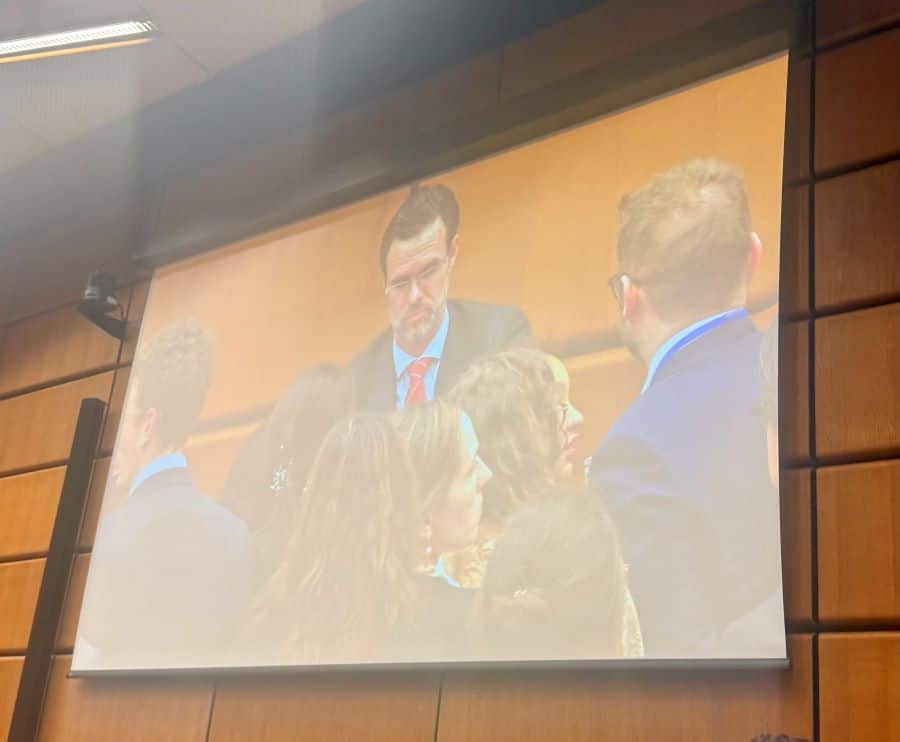
During the week of 22 September 2025, States once again met in Vienna under Working Group III (WGIII)...

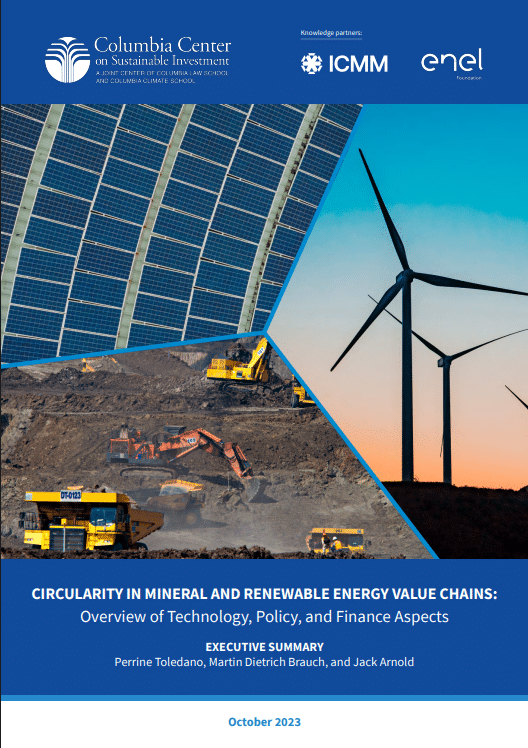
The global transition to renewable energy systems will be mineral intensive and, under the current linear economy conditions,...


Mining, Metals and Resource-based Development

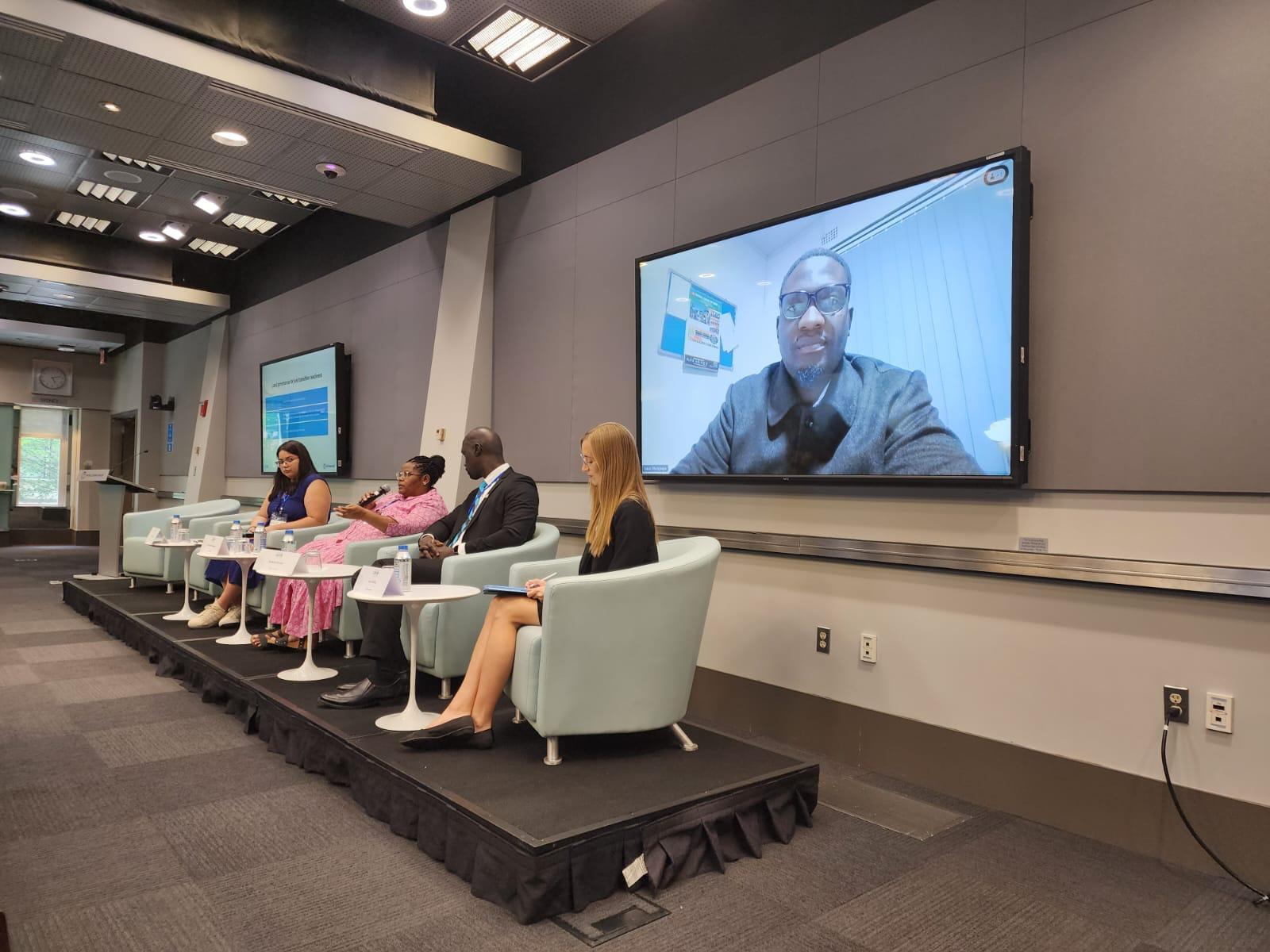
At the 2025 World Bank Land Conference, the Columbia Center on Sustainable Investment (CCSI) organized a session, “Elements of Just Transition Readiness: Lessons and Strategies for Transition-Effective Land Governance.” The discussion, moderated by Lara Wallis, formerly Senior Legal Researcher at CCSI, brought together land governance experts and partners from the Advancing Land-Based Investment Governance (ALIGN) project to reflect on experiences from Sierra Leone, South Africa, Zambia, and Indonesia:
The session grappled with a pressing but often overlooked question: what role does land governance play in the global transition to low-carbon economies? As investments in renewable energy, critical minerals, biofuels, and land-based ecosystem services continue to scale, land systems are under growing pressure. Yet land is too often invisible in climate and just transition frameworks, despite being central to whether transitions are truly just in practice, not just in principle.
Our discussion made clear that land governance is not peripheral to the just transition, it is foundational. Three overarching insights emerged:
Across contexts, weak or insecure tenure heightens risks of dispossession, displacement, and conflict as land demands grow from mining, renewables, biofuels and other land-based climate mitigation and adaptation investments.
In South Africa, Dr. Gaynor Paradza highlighted how the legacy of dispossession continues to shape whose rights are recognized and whose are sidelined in the transition. In Zambia, Isaac Mwaipopo pointed to the challenges of the dual tenure system. Communities on customary land are increasingly being displaced by competing pressures from mining, conservation, and agriculture, which often leads to land conflict and undermining food security. In Indonesia, complex tenure arrangements and slow land rights recognition processes have left local communities and Indigenous Peoples particularly vulnerable as investment in nickel mining and biofuels accelerates to meet global energy transition demands.
These experiences underscore that secure tenure is more than just a legal formality. It is essential for communities to safeguard their rights, pursue their self-determined development priorities, and participate as leaders and partners in climate action. It also serves as an important starting point to help decision makers effectively allocate and designate land in ways that advance rather than undermine just transitions and effective climate action.
Sonkita Conteh highlighted Sierra Leone’s Customary Land Rights Act as an example of meaningful progress. The Act marked an important breakthrough by strengthening community land rights and requiring community consent for all forms of investment. This will ensure that impacted communities are equal decision-makers and partners in climate action, rather than passive stakeholders.
The session underscored the value of advancing decentralized and people-centered land governance approaches, including through sustainable and participatory land use planning, legal and policy reform, locally led development planning, and strengthened intergovernmental coordination across all levels.
In Sierra Leone, the National Lands Commission Act has been a game-changer. By devolving real authority to communities, establishing quotas for women’s participation, and giving local institutions a central role in decision-making, it represents an important step towards more inclusive and accountable governance.
Other contexts, however, highlight the risks to transition-effective land governance where decentralization is undermined. In Indonesia, the 2020 Omnibus Law centralized investment approval and environmental oversight, disempowering local governments and leaving them unable to advance local priorities or to protect ecosystems. In South Africa, municipalities have been excluded from transition planning, despite the fact that they are often left to deal with the social and economic fallout of mine closures and energy projects without resources or a voice in decision-making.
In the Zambian context, the discussion emphasized the need for stronger intergovernmental coordination to prevent contradictory land allocations, such as land being designated simultaneously for farming and mining, and called for cross-stakeholder engagement and meaningful cost-benefit analysis before licenses are issued. Taken together, these examples show that strengthening intergovernmental coordination and embedding locally led planning will be vital for transitions that are both responsive and just.
Even where strong laws and policies exist on paper, political economy realities such as power imbalances, weak enforcement, and entrenched interests often determine whether they deliver in practice.
Panelists highlighted how historical legacies of colonial and extractive governance, combined with corporate influence and capacity gaps, continue to undermine meaningful participation and equity. Communities may succeed in winning constitutional cases or pushing for progressive legislation, but without effective implementation, the burden falls back on those most affected to defend their rights.
In Zambia, it was noted that while frameworks such as the Green Growth Strategy formally recognize sustainable land management, implementation remains inconsistent, leaving communities vulnerable to displacement and environmental harm. In South Africa, Dr. Paradza pointed out that communities often resort to costly litigation to enforce constitutional protections when consultation processes fall short. Sonkita Conteh from Sierra Leone reminded participants that even groundbreaking laws like the Customary Land Rights Act require constant vigilance to ensure they are applied fairly, particularly in the face of powerful investors.
As the panel stressed, addressing these political economy realities requires more than technical fixes. Legal empowerment, stronger accountability mechanisms, and truly participatory policymaking are essential if climate ambition is to be aligned with sustainable development.
The conversation closed with a reminder that land is not simply an asset to be managed for projects. It is the source of livelihoods, cultural heritage, and the basis for community resilience in the face of growing climate vulnerabilities. If the global energy transition is to be just, land governance must be made visible and central. Transition-effective land governance requires us to confront entrenched power dynamics, close implementation gaps, and create space for local actors to lead rather than just be consulted. The insights from Sierra Leone, South Africa, Zambia, and Indonesia offer powerful lessons: securing tenure, decentralizing governance, and tackling political economic realities are not optional add-ons. They are the foundations of a just transition.
Click here for the session agenda.
Click here for the powerpoint slides.
This session was organized as part of Advancing Land-Based Investment Governance (ALIGN), a project implemented by CCSI, International Institute for Environment and Development (IIED), and Namati. This session builds on lessons and insights generated as part of ALIGN’s long term in-country work advanced in collaboration with country level partners in Indonesia, Zambia, Sierra Leone and South Africa. Learn more about the ALIGN project here.
Related CCSI resources from the ALIGN project:
Hansika Agrawal is a Legal Researcher at the Columbia Center on Sustainable Investment (CCSI).