Time and Compromise in UNCITRAL’s Working Group III
During the week of 22 September 2025, States once again met in Vienna under Working Group III (WGIII)...
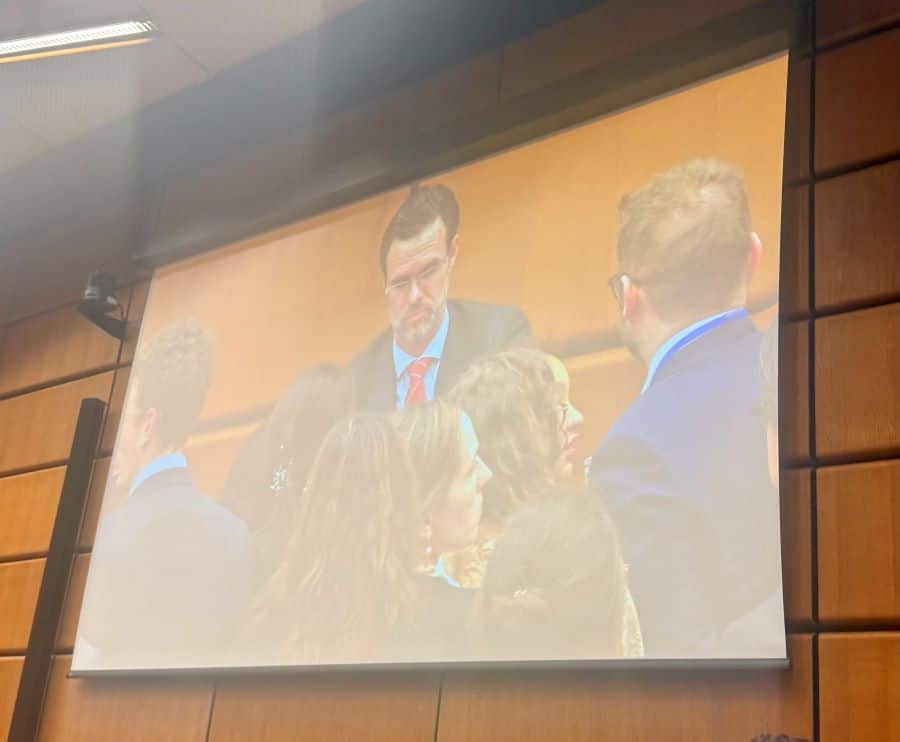
During the week of 22 September 2025, States once again met in Vienna under Working Group III (WGIII)...

The global transition to renewable energy systems will be mineral intensive and, under the current linear economy conditions,...


The views expressed in this report do not necessarily represent the views of the World Bank Group or Columbia Center on Sustainable Investment. CCSI has supported the publication of this report because of the importance of the subjects covered in this report, the importance of institutional investors and private capital in addressing climate and broader sustainable development goals, and the need for rigorous, analytical, and practical discussion around how to mobilize the capital. CCSI hopes that the publication of this report will support the continued debate and discussion among relevant practitioners, policymakers, financial institutions, and regulators. Please share any feedback or comments with us at ccsi@climate.columbia.edu.
Significant attention has been paid to how to mobilize trillions of dollars of private capital toward global climate goals.As part of that discussion, a great detail of attention has been paid to the question of whether institutional investors are permitted, and perhaps even required, to address those risks within their fiduciary duty. In the Line of Duty? Institutional Investors’ Responsibilities Regarding Systemic Risks, authored by Fiona Stewart from the World Bank and Harald Walkate of Route 17, addresses this issue. It focuses on two main research questions: “Is it possible to allow, or encourage, institutional investors to engage in systemic risk mitigation interventions with the prevailing definition of fiduciary duty? What can we do to further encourage and support universal owners in addressing the systemic risk of climate and nature loss?”
These questions have derived from a desire for institutional investors to contribute to climate solutions: the systemic risk / fiduciary duty framing is intended to persuade institutional investors to take action by convincing them that (1) they face substantial systemic risk; (2) they have a number of tools at their disposal to address this risk; (3) fiduciary duty poses no barrier to addressing the risk and deploying the tools.
The two overarching messages that emerge from this particular report are:
What is needed to truly mitigate systemic risks (and more importantly, to reach our climate and sustainable development goals) is the reallocation of trillions of dollars into geographies, sectors and projects that are either not investment-grade (as in most low income countries), or are not necessarily profitable (as in most adaptation projects or early-phase out of fossil fuel projects. The re-orientation of trillions of dollars of capital will not happen by financial institutions’ efforts to mitigate systemic risk. It requires real transition frameworks and corresponding policies and regulations, and large amounts of public investment, both directly as well as to de-risk, guarantee, and catalyze investment into those areas It requires engaging with how credit rating agencies currently assess sovereign risk, and limits on developing countries’ ability to borrow on concessional terms. And it requires innovative approaches in financial institutions to scale new finance according to need.
Document