A Specialized Guarantee Facility for Industrial Decarbonization: The Case for a Dedicated, Pooled Risk-Sharing Instrument
This blog was originally published on Illuminem, and has been co-authored with Rhian-Mari Thomas. She is the CEO...
This blog was originally published on Illuminem, and has been co-authored with Rhian-Mari Thomas. She is the CEO...


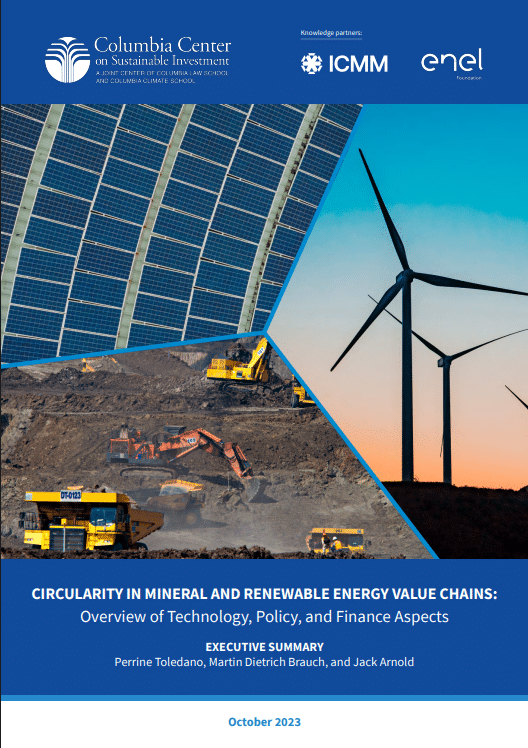
The global transition to renewable energy systems will be mineral intensive and, under the current linear economy conditions,...


Exploring a servitization and securitization model as a means to improve critical mineral supply and increase circularity.

A significant supply of secondary (i.e., recycled) metal will be needed to accommodate rising demand for clean energy metals. Although some exploration into transformational circular business models has been done, further research and systems thinking are necessary to overcome the metals value chain’s inherent cultural inertia to maintain the norm.
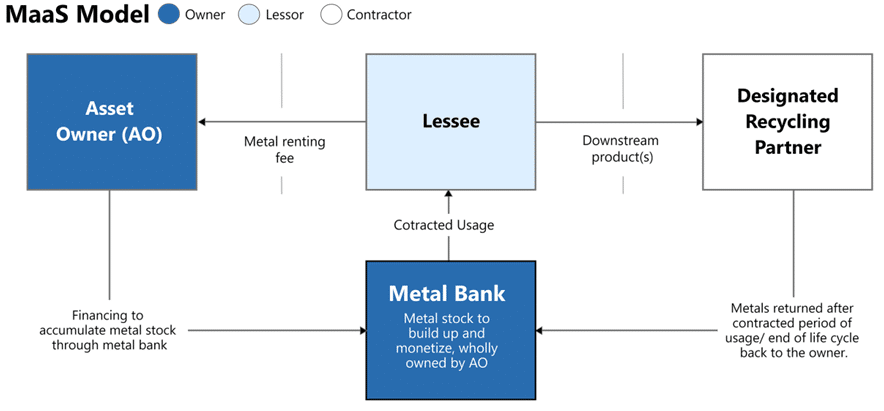
Metals-as-a-Service (MaaS) is a servitization model based on granting customers the right to use a metal, while the ownership remains with one segment of the value chain. As an alternative business model, MaaS can be used as a strategy to transform the global metals value chain with the potential to:
To better evidence this potential, CCSI partnered with the Carbon Trust to provide the research, analysis, and stakeholder engagement that lays an effective groundwork with three components:
On July 15, 2025, CCSI and the Carbon Trust co-hosted a closed-door strategy workshop in London convening a diverse group of actors from across the metals value chain—including mining, recycling, trading, manufacturing, finance, and policy—to examine how MaaS might unlock the untapped economic value of secondary metals, support circular systems change, and reduce pressure on primary supply. The workshop aimed to: (1) assess the economic potential of MaaS; (2) identify priority areas for further research and piloting; and (3) launch the first community of practice dedicated to MaaS.
On December 4, 2025, the project partners held a webinar for the Community of Practice on “Metals as a Service: Financial Viability, Business Models, and Practical Applications in the Wind industry.”
Key themes from the webinar included real-world MaaS case studies with a focus on steel to wind turbines, advantages of business and financing structures like SPVs, economic analysis evidencing the business case, risk analysis, and digital traceability for investor confidence.
Document