Circular Economy in Mineral and Renewable Energy Value Chains
The global transition to renewable energy systems will be mineral intensive and, under the current linear economy conditions,...
The global transition to renewable energy systems will be mineral intensive and, under the current linear economy conditions,...


The global transition to renewable energy systems will be mineral intensive and, under the current linear economy conditions,...
Providing practical tools that can be used during investment assessment processes so that meaningful participation by women can strengthen strategies around land use, food security, water access, and livelihoods.
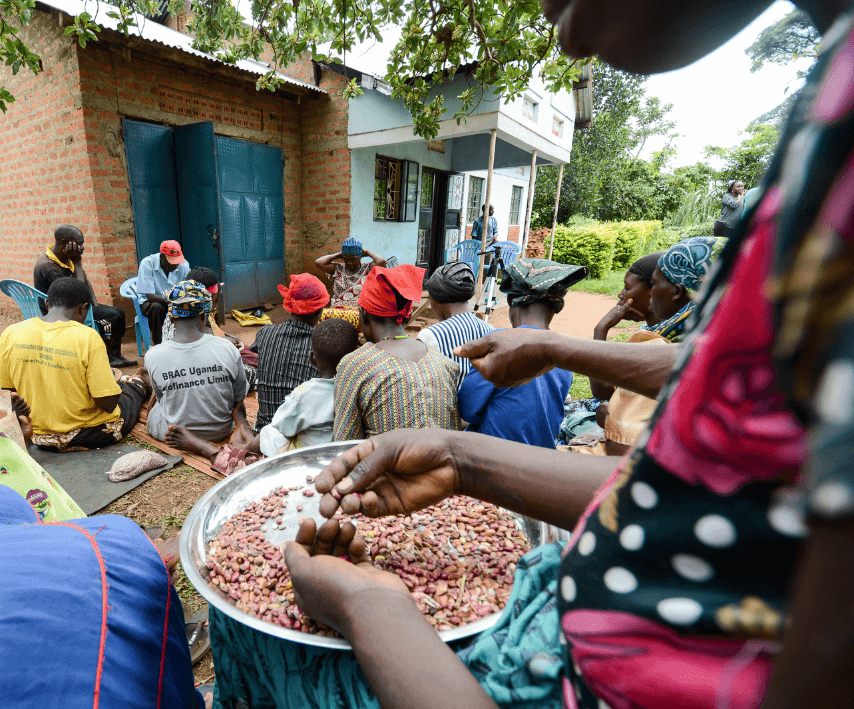
Governments are increasingly being asked to develop integrated strategies for food systems, energy transitions, climate resilience, and land use. However, these strategies depend on participatory processes to surface local priorities and insights. When investment assessment processes overlook key groups, the result is weaker policy design and higher implementation risk.
This toolkit reflects the understanding that meaningful community engagement is not ancillary to investment planning—it is a core component of sound policy-making and investment processes. Women’s participation, in particular, is central to understanding land use, food security, water access, and livelihood dynamics that investment strategies must account for if they are to be effective and equitable.
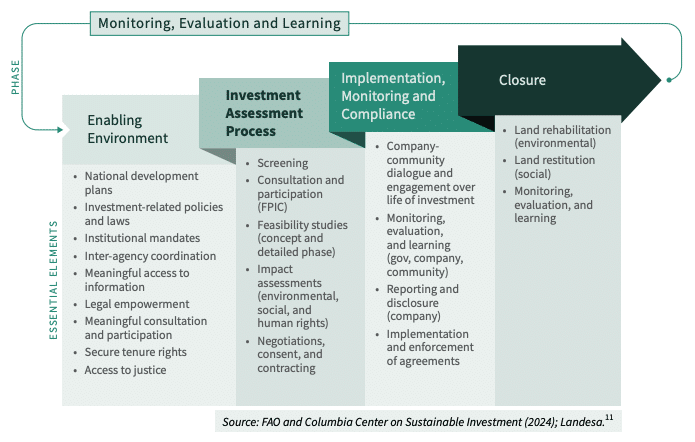
A flow diagram of the investment life cycle:
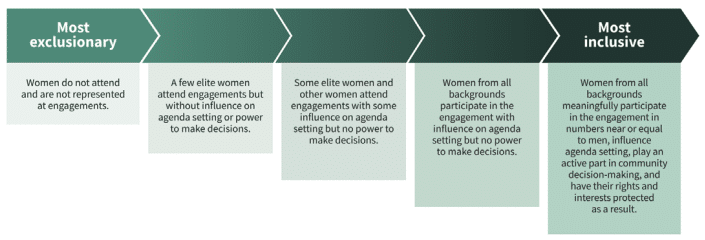
Too often, women are ignored or overlooked in processes intended to engage with affected populations about land investments. Even women’s physical presence at meetings does not automatically mean that women—and the many diverse subgroups of women—are able to meaningfully engage or have decision-making power. Women’s meaningful participation in community engagements is crucial for responsible, legally-compliant, and successful investments to the benefit of governments, investors, and communities alike.
Example of community engagement outcomes on the women’s rights continuum:
This toolkit explores the underlying causes of, and specific barriers women face, to meaningful participation in community engagements and suggests practical strategies to overcome those causes and barriers based on literature and the authors’ and reviewers’ experiences.
This toolkit is intended for government officials, company representatives, staff of NGOs and local CSOs, on how best to ensure women’s meaningful participation in community engagements. We designed this resource with the aim of it being particularly helpful when arranging and facilitating community engagements, which will often (but not always) take the form of meetings.
You can access the entire toolkit in English, and soon unofficial translations in French, Bahasa, and Portuguese will be available.
You can also access its components:
See also, a two-page governance flash intended for governments seeking to understand this important element of land-based investments.
This resource was produced in collaboration with the International Institute for Environment and Development (IIED) as part of ALIGN, funded by UK Aid from the UK government.

Across coffee-growing regions, governments and coffee growers are asking how to align investment with sustainable development goals. They are als...
Supporting governments, civil society, communities and peoples, and other relevant actors in strengthening the governance of land-based investmen...
Tool