Time and Compromise in UNCITRAL’s Working Group III
During the week of 22 September 2025, States once again met in Vienna under Working Group III (WGIII)...

During the week of 22 September 2025, States once again met in Vienna under Working Group III (WGIII)...

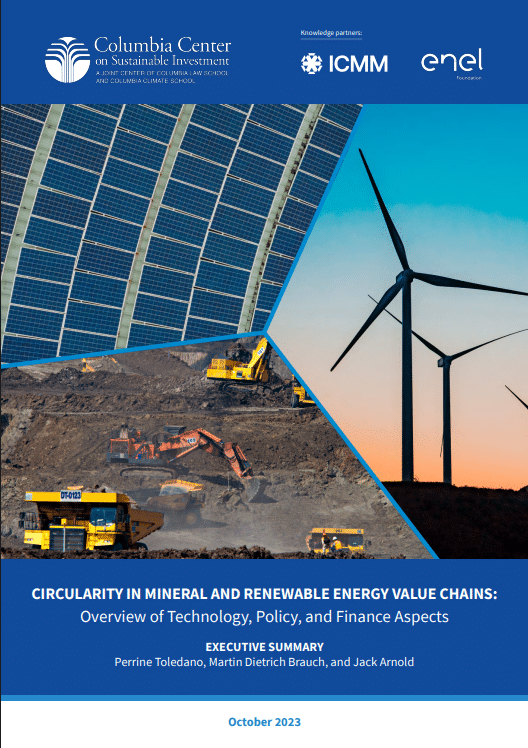
The global transition to renewable energy systems will be mineral intensive and, under the current linear economy conditions,...


Mining, Metals and Resource-based Development
Shedding light on the provisions that underpin the shared use of mining-related infrastructure and providing guidance on how governments might strengthen provisions to advance shared use of railroads, ports, and power
Many developing countries face an infrastructure funding gap: the public sector is unable to finance the construction of vital public works, such as railroads, ports, and power infrastructure. Extractive industry investments in infrastructure can help to narrow the gap. Non-renewable resources serve as a foundation to construct long-term infrastructure assets that support sustainable development. The rub lies in the fact that mining companies have traditionally followed an “enclave model,” building infrastructure for their exclusive use. Although mining infrastructure might eventually be owned by the state, such as through a build–operate–transfer arrangement, the enclave model causes governments to lose the opportunity to take advantage of synergies between the infrastructure and larger national development plans. In turn, shared-use mining infrastructure leverages the investments made in a mining operation’s infrastructure to expand benefits to national and regional communities. This paper looks at legal provisions related to shared-use mining infrastructure to support governments, the private sector, and communities in capitalizing on those synergies.
In 2011, CCSI began to research how mining infrastructure can be leveraged for sustainable development and in 2013 created an economic, legal, and operational framework to generate shared-use benefits from rail, ports, power, water, and internet and telecommunications. CCSI has published many works on shared use in the mining sector. Those works, along with other mining-related publications and mining concessions available online, ground the analytical framework of this paper, provide insight on the economic drivers of the mining sector, and detail how legal provisions—including laws, regulations, and contractual terms—can forefront shared use.
This paper is part of CCSI’s larger work on extractive industries which endeavors to make mining more beneficial and sustainable for people, private enterprise, and the natural environment. It sheds light on the legal, regulatory, and contractual provisions that underpin shared-use mining infrastructure and provides non-exhaustive guidance on how governments might strengthen them to advance shared use of railroads, ports, and power.