Time and Compromise in UNCITRAL’s Working Group III
During the week of 22 September 2025, States once again met in Vienna under Working Group III (WGIII)...
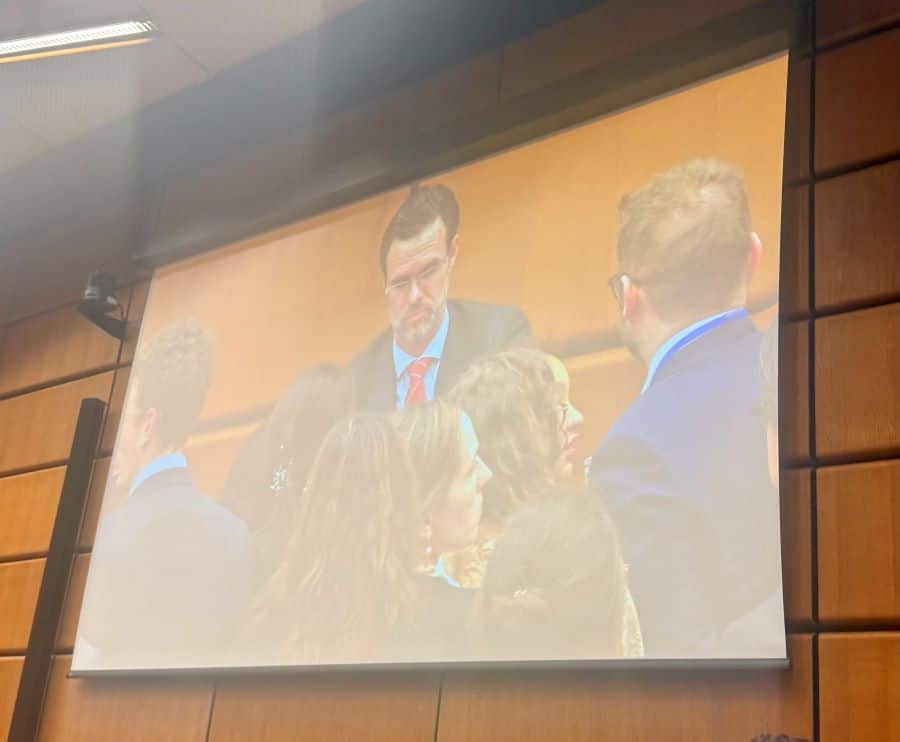
During the week of 22 September 2025, States once again met in Vienna under Working Group III (WGIII)...

The global transition to renewable energy systems will be mineral intensive and, under the current linear economy conditions,...


Environmental, social, and human rights assessments help governments manage risks, protect communities, and strengthen project outcomes.
Environmental Impact Assessments, Social Impact Assessments, and Human Rights Impact Assessments need to be conducted to assess the potentially adverse social, environmental, and human rights impacts of a particular investment and be better placed to manage and mitigate the risks. With an understanding of the impacts, site-specific environmental, human rights, and social parameters can then be included in the tender documents and incorporated into the investment contract entered into between the government entity and the investor.
Where a local community stands to be affected by an investment, it is important that a government engages early on with such a community. The internationally-recognized principle of free, prior, and informed consent, or FPIC, provides that indigenous peoples have a right to consultation on matters, like investments, that affect their rights and interests. There is also increasing international consensus that non-indigenous communities have a right to be consulted with and to participate in public decisions that affect their lives. Consulting with communities and obtaining FPIC also reduces the risk of social conflict, which minimizes transactional costs and ensures greater certainty for the project.
The Human Rights Impact Assessment Guide is a step-by-step, participatory toolkit that allows assessment teams to take stock of the positive and negative human rights impacts of an investment project. It was developed by the International Centre for Human Rights and Democratic Development as a resource for communities and civil society, with guidance, research questions, and follow-up methods for assessing, reporting, and addressing impacts.
The Guidebook for Evaluating Mining Project EIAs was produced by the Environmental Law Alliance Worldwide (ELAW) to help grassroots advocates and communities understand mining EIAs, identify flaws in mining project plans, convince decision-makers to reject ill-conceived mining projects, and explore ways that proposed mining projects could be made socially and environmentally acceptable. It explains how to read mining EIA documents, spot weaknesses in project plans, and participate effectively in the review process.
Available in English, Spanish, French, and Russian.
The IISD’s Investment Contracts for Farmland and Water is a tool for parliamentarians, government officials, landholders and local communities who are involved in negotiating investment contracts with foreign investors for agricultural land and water. It gives a step-by-step framework for preparation, including assessing food security, land and water rights, community engagement, and project impacts before signing a deal.
This collaboration between the UN Economic Commission for Africa and the Institute for Peace and Conflict Resolution Analyzes Africa’s overreliance on extractive industries and outdated “comparative advantage” models. The paper recommends energy transitions as a foundation for industrialization, economic diversification, and regional integration.
This report provides a comprehensive outlook on how Africa can leverage natural resource endowments during global decarbonization. The French Development Agency and World Bank offer strategies for governance, industrial policy, and technological adoption to avoid renewed resource dependency.
CCSI outlines pathways to achieve universal electricity access in Africa while still meeting climate objectives. The roadmap assesses investment needs and policy frameworks for distributed solar, regional power pools, and large-scale renewables.
A key text for understanding the relationship between the circular economy and extractive industries, this paper provides utility for government officials by highlighting relevant opportunities for local value retention, reduced environmental risks, and improved resource efficiency.
In an illustrative case study, CCSI and energy tech company Capterio assess how capturing flared or wasted associated gas in North Africa can support climate goals and reduce Europe’s reliance on Russian gas. The paper recommends repurposing existing gas infrastructure for short-term gains.
CCSI quantifies emissions from refining and petroleum product sales, attributing significant shares of global carbon footprints to oil supermajors. The report demonstrates that downstream activities, not just production, are major drivers of emissions. The findings reinforce broader calls for industry accountability, and help justify strong environmental clauses and regulatory safeguards within contracts with major oil companies.
This roadmap from the IFC identifies emissions hotspots in mining, refining, and transport operations, as well as technology options and financing strategies, on the road towards decarbonizing copper and nickel value chains. For negotiators, it can serve as a resource to implement contractual commitments from mining firms to adopt low-carbon practices.
This analysis addresses the escalating challenge of decommissioning offshore oil and gas projects as energy systems decarbonize. It examines financial, regulatory, and environmental dimensions of safely retiring infrastructure, with particular focus on liability risks for host states. The study calls for proactive governance to avoid stranded public liabilities.
This paper examines how equity and fairness should inform the design of compensation mechanisms for climate change and the energy transition. It emphasizes differentiated responsibilities and distributive impacts across states and companies. Concrete pathways are suggested to embed equity principles in agreements.
This report assesses how artisanal and small-scale mining (ASM) contributes to or undermines various Sustainable Development Goals. It outlines both the developmental benefits and the social and environmental risks of ASM. Recommendations include pathways to formalization and support for ASM communities. For negotiators, it highlights entry points for including ASM integration or regulation measures in regional resource agreements.
This series addresses political economy realities behind extractive governance, covering issues such as free, prior, and informed consent, transparency, and environmental impact assessments. The authors argue that ignoring political context leaves reforms ineffective. Practical strategies for embedding political considerations into governance are suggested. For negotiators, these insights can help anticipate domestic political constraints that could affect the enforceability of contract terms.
Issue 1: “Free, prior, and informed consent: Getting political to improve impact,” (2020).
Issue 2: “Transparency and extractive industries: Getting serious about politics to get serious about impact,” (2020).
Issue 3: “Tackling the EIA Impact Gap: Addressing Political Economy Realities to Bring Actual Practice Closer to Best Practice,” (2022).
This CCSI blog reviews the 2024 draft UN principles on critical minerals and finds that they fall short of addressing equity, environmental, and human rights concerns. The authors propose stronger normative frameworks tailored to the transition economy. They emphasize the importance of justice and fairness within global supply chains.
The report presents ten innovative policy ideas to modernize mining taxation systems. It emphasizes approaches that improve fairness, capture windfalls, and better align with sustainable development. The ideas are informed by emerging global norms and transition needs. For negotiators, it supplies a toolkit of fiscal design options to insist on fairer revenue-sharing arrangements.
This in-depth assessment highlights opportunities for developing countries to move beyond resource extraction by engaging in innovation across mid- and downstream critical mineral supply chains. It addresses barriers such as financing and technology access, while proposing strategies to capture higher value. The report links mineral governance to economic diversification and developmental gains. In a negotiation context, it strengthens the case for securing commitments on technology transfer, local innovation, and R&D in mineral investment contracts.