A Specialized Guarantee Facility for Industrial Decarbonization: The Case for a Dedicated, Pooled Risk-Sharing Instrument
This blog was originally published on Illuminem, and has been co-authored with Rhian-Mari Thomas. She is the CEO...
This blog was originally published on Illuminem, and has been co-authored with Rhian-Mari Thomas. She is the CEO...



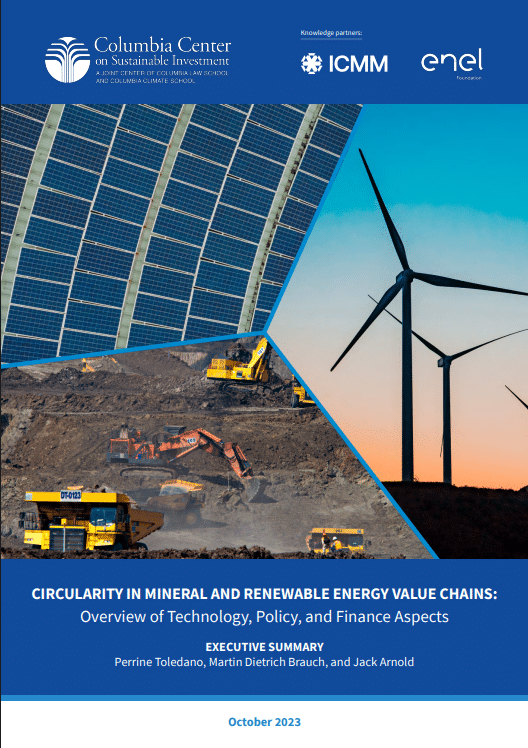
The global transition to renewable energy systems will be mineral intensive and, under the current linear economy conditions,...


Clear oversight responsibilities and coordinated monitoring help governments ensure compliance with investment obligations.
For the government to effectively monitor compliance, it should:
In relation to the extractive industries sector, the World Bank Group’s contract monitoring roadmap details the steps and actions that need to be carried out to effectively monitor the implementation and operation of extractive industry investments.
The Guidebook for Evaluating Mining Project EIAs was produced by the Environmental Law Alliance Worldwide (ELAW) to help grassroots advocates and communities understand mining EIAs, identify flaws in mining project plans, convince decision-makers to reject ill-conceived mining projects, and explore ways that proposed mining projects could be made socially and environmentally acceptable. It explains how to read mining EIA documents, spot weaknesses in project plans, and participate effectively in the review process.
Available in English, Spanish, French, and Russian.
NRGI has developed an easy-to-use interactive guide on the EITI standards and how the EITI can generate meaningful information that improves natural resource governance. For each policy issue covered by the EITI, the guide provides an overview of the issue and why it matters, explains the reach of the EITI requirements, and provides recommendations,
examples and references for further reading.
Enforcing the Rules is a Natural Resource Governance Institute (NRGI) report on monitoring and enforcing mining company obligations under contracts and laws. It identifies common gaps in government oversight and offers practical steps for governments and citizens to improve compliance on payments, production, environment, and community commitments. The guide uses country examples to show how better monitoring prevents revenue losses and supports sustainable development.
Available in French and English.
This report studies how climate-related risks, including carbon pricing, stranded assets, and regulatory shifts, are distributed between states and investors in mining contracts. It finds that contract terms often shift risks disproportionately to governments. Key recommendations highlight more balanced allocations.
This status update evaluates how mining companies report and perform against the Sustainable Development Goals. The findings show uneven progress and gaps between commitments and delivery on the ground. Recommendations highlight actionable entry points for improvement. Benchmarks against which to measure and negotiate company sustainability commitments can be helpful for negotiators.
The report presents ten innovative policy ideas to modernize mining taxation systems. It emphasizes approaches that improve fairness, capture windfalls, and better align with sustainable development. The ideas are informed by emerging global norms and transition needs. For negotiators, it supplies a toolkit of fiscal design options to insist on fairer revenue-sharing arrangements.